

Sports
The Rise of Cricket in India: History, Culture, and Unmatched Popularity

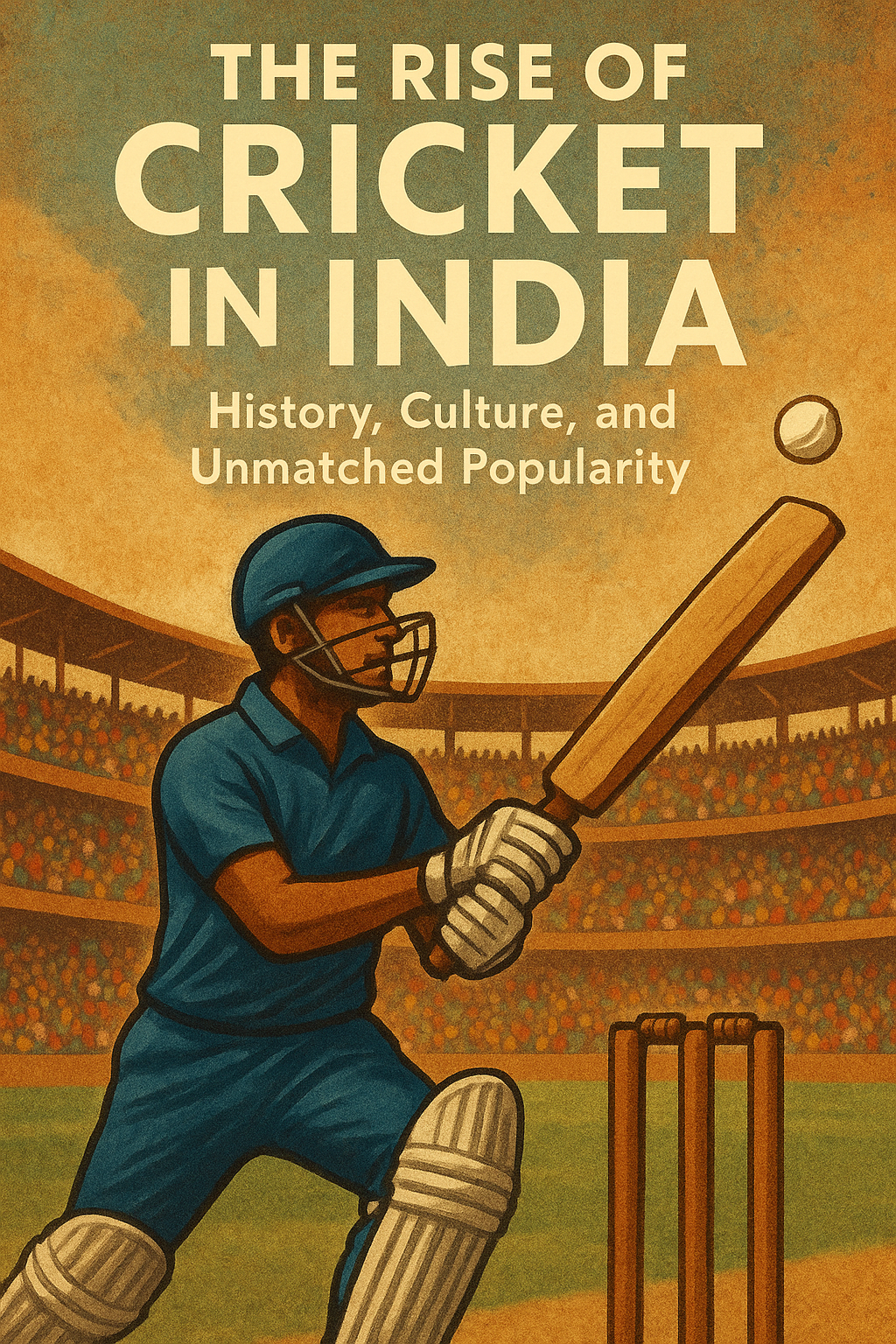
Description: Cricket is more than a sport in India — it is a cultural identity, a national emotion, and a unifying force across a diverse country. This article explores the historical roots, cultural factors, economic impact, and modern influences that have made cricket the most popular sport in India.
Cricket as India’s Undisputed National Passion
Cricket in India is far more than a sport — it is a shared national passion that cuts across age, language, region, and social background. From bustling cities to remote villages, children grow up playing cricket in streets, fields, and open grounds, dreaming of becoming the next big star.
The sport brings families together in front of TV screens, unites strangers in celebration, and creates unforgettable national moments. Every major match becomes an event, with millions tuning in and entire markets coming to a halt. What truly sets cricket apart is its emotional connection with the people. It symbolizes hope, unity, pride, and the joy of collective victory, making it India’s most beloved sport.
Historical Beginnings: How Cricket Arrived and Evolved in India
Cricket arrived in India in the early 18th century with British traders and colonial officers. Initially played exclusively within British communities, the sport gradually attracted interest from local Indian elites who saw it as a symbol of modernity and status. The first recorded Indian cricket club, the Oriental Cricket Club, was formed by the Parsi community in 1848, marking the beginning of Indian participation.
Over time, other Indian communities embraced the game, leading to the formation of regional teams and inter-community tournaments. By the early 20th century, cricket had spread across major cities, and India began participating in international fixtures. The establishment of the Board of Control for Cricket in India (BCCI) in 1928 further formalized the sport’s structure. What began as a colonial pastime evolved into a national sensation, laying the foundation for cricket’s massive cultural rise in the decades to come.
The IPL Revolution: Making Cricket Glamorous and Accessible
The Indian Premier League (IPL) transformed cricket into a fast-paced, glamorous, and highly accessible entertainment spectacle. Launched in 2008, the league brought together international stars, innovative formats, and franchise-based rivalries that immediately attracted fans of all ages. The combination of cricket, celebrity culture, and high-energy presentation made the IPL a household name. With matches scheduled in prime time and broadcast widely across TV and digital platforms, the IPL created massive engagement, making cricket more accessible than ever before. Its success also inspired millions to follow domestic talent, as young players get opportunities to play alongside global legends.
The Mostbet platform has become a central hub for fans to significantly deepen their engagement, particularly through the thrill of cricket betting. Offering essential tools like match statistics and live scores, Mostbet has become a popular destination for enthusiasts looking to bet on the outcome of IPL matches. Mostbet India offers a wide range of betting markets, allowing users to predict everything from the match winner and top batsman to specific game events like runs per over.
The ability to place strategic bets transforms watching from passive entertainment into an active, exciting, high-stakes experience. Offering competitive odds and a user-friendly interface, Mostbet allows fans to leverage their knowledge of the game, adding an extra layer of intensity and personal involvement to every ball bowled throughout the season.
Legacy of British Influence on Indian Cricket Culture
The British left a profound and lasting impact on cricket’s place in Indian culture. During colonial rule, cricket was used as a social tool, reflecting British ideals of discipline, sportsmanship, and hierarchy. However, Indian communities quickly adapted the sport to their own identity. Local clubs formed across the country, and Indians began challenging British teams, using cricket as a platform to showcase talent and assert equality.
This dynamic gave the sport a deeper cultural meaning, turning matches into symbolic contests of pride. British-established schools and institutions also encouraged cricket, helping it spread among students and young athletes. By the time India gained independence, the sport had already become embedded in the country’s social fabric. Although the British introduced cricket, Indians transformed it into a powerful cultural expression, reshaping it into something uniquely their own.
Cricket’s Role in India’s Post-Independence Identity
After independence in 1947, cricket became an important part of shaping India’s national identity. The sport offered a unifying narrative for a newly formed nation recovering from partition and rebuilding its identity. Victories on the cricket field were seen as victories for the nation, boosting morale and creating moments of shared pride.
The 1983 Cricket World Cup triumph was especially symbolic — it marked India’s arrival on the global sporting stage and gave millions a renewed sense of confidence. Over the decades, cricket became an expression of patriotism, with players turning into national heroes who represented hope and ambition.
The Emotional Connection: Why Cricket Appeals to Every Indian Household
Cricket’s emotional pull in India runs deeper than competition — it is woven into everyday life. Families gather around televisions during major matches, turning games into social events filled with excitement, tension, and celebration. The sport appeals to a wide audience because it reflects relatable stories of struggle, hope, and success. Many iconic players rose from humble beginnings, inspiring millions who see their own dreams mirrored on the cricket field.
The simple, accessible nature of the game also helps; children can play with minimal equipment, creating early attachments that last a lifetime. Cricket matches often evoke powerful emotions, whether it’s the thrill of a last-over chase or the pride of seeing the national flag raised.
Media Power: How Television and Online Platforms Boosted Popularity
The media has played a major role in transforming cricket into India’s most popular sport. In the 1980s and 1990s, television brought cricket into millions of homes, turning matches into national events. Live broadcasts, expert commentary, and pre-match shows made the sport more engaging and accessible. As television viewership soared, cricket became a shared experience across the country. With the rise of digital platforms and smartphones, cricket’s reach expanded even further.
Streaming services allow fans to watch matches anytime, anywhere, while social media highlights, memes, and discussions keep cricket constantly in conversation. Platforms like YouTube, Instagram, and Twitter have made players more relatable, giving fans behind-the-scenes access to their lives.
The Rise of Cricketing Icons and Their Cultural Impact
Cricketing icons have played a central role in shaping the sport’s popularity in India. Legendary players like Kapil Dev, Sachin Tendulkar, MS Dhoni, and Virat Kohli have become household names, inspiring generations with their skills, humility, and leadership. Their journeys — often from modest backgrounds to global stardom — resonate deeply with fans who see them as symbols of hard work and ambition. These icons transcend sport, influencing fashion, advertising, and popular culture.
Their achievements create lasting national memories, and their personalities foster emotional bonds with fans. Each era has its heroes, from the 1983 World Cup team to modern IPL superstars, ensuring cricket remains relevant for every generation. Beyond performance, players’ philanthropic work and social messages further strengthen public admiration. As cultural ambassadors, cricketing icons shape national identity and reinforce the sport’s special place in Indian society.
Team India’s Major Victories and Their Influence on National Pride
India’s major cricket victories have had a profound effect on national pride, uniting the country in moments of shared celebration. The 1983 World Cup win was a turning point, proving that India could excel on the global stage and inspiring a new cricketing generation. The 2007 T20 World Cup triumph and the 2011 ODI World Cup victory under MS Dhoni reignited national enthusiasm, with millions celebrating in streets across the country.
Historic Test series wins, such as the 2021 victory in Australia, also carry emotional weight, showcasing resilience and determination. Each major achievement boosts national confidence and reinforces India’s identity as a cricketing powerhouse. These victories create unforgettable moments that become part of collective memory, strengthening unity across diverse regions and cultures. For many Indians, cricket success symbolizes national progress, making each win more than a sporting achievement — it becomes a celebration of the country itself.
Grassroots Cricket: Why Every Town and Village Loves the Sport
Cricket thrives in India because it is deeply rooted at the grassroots level, extending into small towns, villages, and local communities. Unlike many other sports requiring specialized equipment or facilities, cricket can be played anywhere — streets, open fields, school grounds, or even makeshift spaces. This accessibility allows children to start playing at a very young age, nurturing passion and talent organically. Local tournaments, school competitions, and community matches help players gain confidence and visibility.
State associations and academies also identify young talent from remote areas, offering them training pathways to professional cricket. Success stories of players like MS Dhoni, Ravindra Jadeja, and Mohammed Shami — who rose from small towns — inspire millions, proving that cricketing dreams can begin anywhere. The sense of community, joy of friendly competition, and pride of representing one’s local area make grassroots cricket an essential part of India’s sporting culture.
Economic Impact: Brands, Sponsorships, and Cricket’s Billion-Dollar Ecosystem
Cricket in India has evolved into a massive economic engine, generating billions through advertising, sponsorships, broadcasting rights, merchandise, and major tournaments like the IPL. Brands across industries compete for visibility during cricket events because matches attract enormous viewership. From beverage companies and tech brands to e-commerce giants, corporate partnerships fuel the sport’s financial growth.
The Board of Control for Cricket in India (BCCI) is now one of the wealthiest cricket bodies globally, largely due to lucrative media deals and sponsorship contracts. Players also benefit, earning from match fees, endorsements, and league salaries. The economic impact extends beyond professionals — ground staff, event managers, broadcasters, hospitality services, and sports retailers all benefit from cricket’s popularity.
Conclusion
Cricket’s unparalleled rise in India is the result of a powerful blend of history, culture, emotion, and opportunity. From its origins during British rule to its transformation into a symbol of national pride after independence, cricket has grown into a unifying force that reflects the nation’s spirit. Every era — from the early community clubs to the global triumphs of Team India — strengthened its position in the hearts of millions. The influence of media, the emergence of iconic players, and the glamour of the IPL have further broadened its reach, making cricket both accessible and aspirational.
At the grassroots level, the sport thrives in every corner of the country, proving that passion, not privilege, drives India’s cricketing success. Economically, cricket has become a billion-dollar powerhouse, supporting countless industries and creating opportunities far beyond the boundary lines.

The digital entertainment industry has changed significantly over the past decade. Online users no longer expect complicated interfaces or lengthy instructions before exploring a new platform. Instead, they prefer simple navigation, responsive layouts, quick interactions, and visually engaging experiences. These preferences originally became popular through casual browser games and are now influencing several other digital industries, including sports prediction platforms.
Modern sports prediction services are increasingly adopting design principles associated with lightweight online games. The objective is not simply to make platforms look attractive but to create an environment where information is easier to understand and interactions feel more natural. Platforms such as winfix and Vikrant Exchange are part of a broader online ecosystem where accessibility and user experience have become important considerations.
Understanding this design shift reveals why casual gaming principles are becoming relevant to sports-focused digital platforms.
1. Simplicity Is Becoming a Major Design Priority
One of the biggest advantages of casual browser games is their straightforward structure. Users can usually understand the basic interface without reading extensive instructions or navigating multiple menus.
Modern sports prediction platforms are applying a similar approach. Instead of presenting every available feature on one crowded screen, many digital interfaces organize information into clearly defined sections.
For example, a sports-focused platform might separate match information, available markets, account settings, and other features into individual areas.
This structure offers several benefits:
- Reduces unnecessary navigation.
- Makes important information easier to locate.
- Helps new users understand the interface.
- Creates a more consistent browsing experience.
A straightforward layout is particularly useful when users access platforms through smaller mobile screens.
2. Personalization and User-Controlled Experiences
Another important feature of modern casual gaming interfaces is personalization. Many platforms allow users to adjust settings, select preferred categories, and organize their experiences according to individual interests.
Sports-focused platforms can introduce similar functionality through customizable preferences.
Examples include selecting favorite sports, following particular competitions, adjusting notification settings, or organizing frequently visited sections.
These features can make navigation more relevant without requiring complicated technical knowledge.
In the context of Vikrant Exchange, the broader principle is that digital platforms should prioritize clear organization and user control when presenting their available features.
Personalization should also respect privacy. Users should understand what information is collected and have reasonable control over their account preferences.
3. Mobile-First Design Is Changing User Expectations
Casual browser games helped establish the expectation that digital entertainment should be accessible across different devices. Users increasingly expect websites to function smoothly whether they are browsing on a desktop, tablet, or smartphone.
Sports prediction platforms face the same challenge.
A mobile-friendly interface should automatically adjust its layout to different screen dimensions. Navigation menus should remain accessible, text should be readable, and important information should not disappear behind unnecessary design elements.
For platforms such as winfix, responsive design is an important consideration because users may access different sections through various devices.
A properly optimized mobile experience can include:
- Flexible page layouts.
- Readable typography.
- Touch-friendly navigation.
- Fast-loading content.
- Consistent presentation across devices.
These improvements support usability rather than simply changing the appearance of a website.
4. Short Interaction Cycles Encourage Better Navigation
Casual games are generally designed around short interaction cycles. A user performs an action, receives feedback, and decides what to do next.
This structure has influenced modern website design because it makes digital experiences feel more organized.
Sports prediction platforms can use the same concept when presenting match schedules, team information, statistics, and other features.
For example, instead of requiring users to navigate through several unrelated pages, a well-organized interface can present relevant information in connected sections.
However, shorter interaction cycles should not come at the expense of transparency. Users should always have enough information to understand the available options, associated conditions, and potential risks.
Convenience is valuable only when important details remain accessible.
5. Visual Feedback Makes Digital Interactions More Engaging
Casual browser games frequently use visual feedback to communicate what happens after a user takes an action. Buttons change appearance, progress indicators update, and animations provide immediate confirmation.
Sports prediction platforms can apply similar principles without making their interfaces unnecessarily complicated.
For instance, clearly highlighting selected options, displaying updated match information, and providing visible confirmation after an account action can make the overall experience easier to follow.
Good visual feedback should always serve a practical purpose. Excessive animations or distracting effects can make an interface difficult to use, especially when users are trying to understand detailed sports information.
The most effective approach combines attractive presentation with clear communication.
6. Performance Matters More Than Decorative Design
A visually impressive website can still provide a disappointing experience if pages load slowly or interactive elements fail to respond.
Casual browser games have demonstrated the importance of lightweight performance. Their interfaces are often designed to minimize unnecessary loading and keep interactions responsive.
Modern sports prediction platforms can benefit from similar optimization techniques.
Important performance considerations include image compression, efficient scripts, reliable hosting, optimized page structures, and regular technical maintenance.
Website developers should also test performance under different network conditions rather than assuming every visitor has access to a fast internet connection.
A fast, stable interface improves accessibility and helps users focus on the information they actually need.
7. Responsible Design Should Remain Part of the Experience
There is an important difference between making a platform engaging and encouraging excessive usage.
Casual game design sometimes uses rewards, notifications, and visual prompts to maintain attention. However, sports prediction and betting-related platforms must approach these techniques carefully.
Clear account information, transparent conditions, accessible spending controls, and responsible gaming resources should take priority over attention-grabbing features.
Design should help users make informed decisions rather than create unnecessary pressure to participate.
This is especially important when platforms combine entertainment features with financial wagering. Users should be able to understand the risks and make independent choices.
Conclusion
The growing influence of casual browser game design on sports prediction platforms reflects a wider change in digital user expectations. Simplicity, responsive layouts, visual feedback, personalization, and fast performance are becoming essential elements of modern online experiences.
For platforms such as winfix and Vikrant Exchange, these principles highlight the importance of building interfaces that are accessible, organized, and transparent.
Ultimately, successful digital design is not about adding more animations or complicated features. It is about making technology easier to understand while ensuring that convenience, performance, and responsible user experiences remain at the center of development.
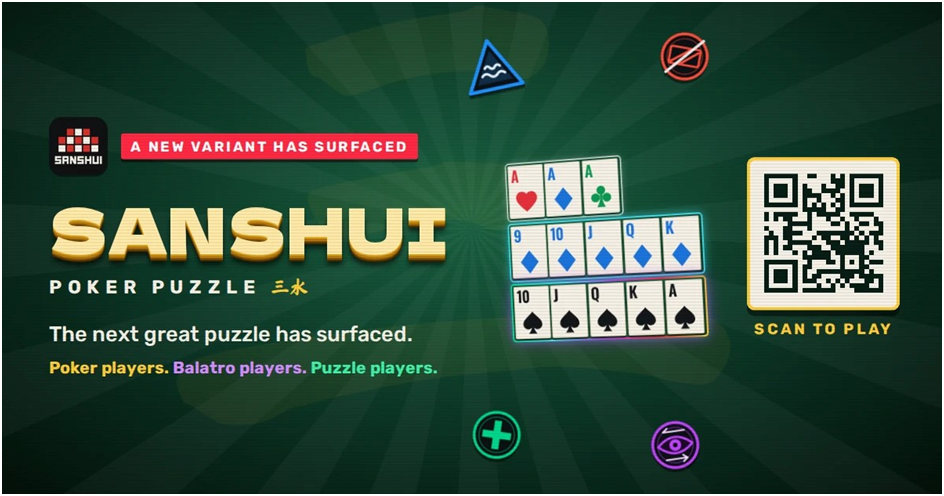
Sanshui: Poker Puzzle is a free poker puzzle game that runs in your browser. No poker night, no
betting, no chips on the table. You get thirteen cards and one question: can you set them into three
hands that hold together?
The demo is huge
Here is the part that matters most: the demo is huge. It is free, it is playable right now, and it is not a
thirty-second teaser that ends before you have learned the rules. There is real game in there. Sit
down, set your hands, learn the tokens, chase a better run, and see how far you get before you ever
think about paying for anything.
Free means free
Most free versions hold the good stuff back. This one lets you in and deals the cards. No special
cards, no paid boosts, and only one purchase ever, if you decide you want the full game. Until then,
the demo is yours to keep playing.
How it plays
Your thirteen cards go into three rows: a three-card front, a five-card middle and a five-card back. The
rule is simple and strict: the rows must not weaken from front to back. Your back hand has to be the
strongest, your middle next, your front last. Get that order wrong and the table does not forgive you.
Get it right and you start to see hands you did not know were hiding in your cards.
Tokens
Then the tokens arrive, and the puzzle bends. Flush and Straight triangles rewrite a row. Adders give
you an extra cell. Blocks get in your way. Hazard voids a row entirely. Spy and Swap shake up what
you thought was settled. Every token changes what a good answer looks like, so the same thirteen
cards can mean something new.
Instant wins
Some hands end the argument at once. The Dragon, the Dragon Flush, Six Pairs, Three Flushes,
Imperial Court and many more win outright, each with its own pixel animation. Spot one in your
thirteen cards and you will want to show someone. The dragons stare you down while you decide:
plain, one-eyed, two-eyed, three-eyed.
Three ways to play
Puzzle mode takes you through levels one to one hundred, climbing the tiers from Apprentice to
Journeyman, Adept, Master, Grandmaster, Serpent and Twin Serpents, and then on into Master
Shen’s tier. Timed mode asks you to beat par for three stars, and Presence, your longest unbroken
run, is the one number on the leaderboard. Shen mode gives you a ten-second curse window, then a
thirty-five-second battle against Master Shen himself.
Master Shen
Master Shen is the rival waiting at the far end of the water. He sets his waters against you and curses
yours, and he never seems to tire. The deeper you go, the deeper it goes, and somewhere below the
tiers the water stirs. Learn his rhythm before he learns yours.
Quick to start
A round fits into a short break. Open it, set your thirteen cards, make a run, close it. Or stay for an hour
and chase the next tier. Either way the demo is waiting, free, in your browser, with nothing to install.
There are no special cards and no paid boosts, so the only edge you ever have is the one in your
head.
Play now
Start with the demo now. It is huge, it is free, and Master Shen is waiting. Play at fourstreetplo.com.
Thanks for playing my game.
-Sportella


Tipoff is at 7:30 in the morning, you are standing on an MRT platform with one bar of signal, and your first meeting starts at nine.
For a student, it is worse. The phone stays locked in the bag until lunch, and by then the game is already a result.
You will not watch this game. You will catch pieces of it, and how you catch them decides whether the morning feels like following the NBA or just losing sleep.
The Math Behind the Early Alarm
Manila sits twelve hours ahead of New York for part of the year and thirteen for the rest. The Philippines has no daylight saving time, so the gap shifts whenever US clocks change. That is why a schedule you memorized in October quietly breaks in November.
A 7:30 p.m. Eastern tipoff arrives at 7:30 in the morning here. A late West Coast game, usually 10 p.m. Eastern, lands at ten, right in the middle of the work or school block.
Most fans respond by picking one game and ignoring the rest. That works until the game you skipped turns out to be the one everyone is talking about at lunch.
The better move is to stop watching and start sampling, and a live score page is built for exactly that.
Sampling Beats Watching
Every game has a handful of moments that carry the story: the opening lineup, the end of the first half, the last five minutes. Everything between them is mostly movement.
A reliable basketball live score page lets you check in at those moments in under ten seconds. You open it, read the score and the quarter, and put the phone away. Nothing to buffer and nothing to unmute.
That is the whole survival strategy.
Read the quarter-by-quarter line, not just the total. A team down twelve after one quarter but level since is in a different spot from a team that has been sliding all night. The total hides that difference.
In the final minutes, look for the small signals: who has five fouls, which side is out of timeouts, and whether the leader is still shooting well. None of that needs video. All of it changes how the last two minutes will probably go.
Lineups are the other thing a good live score page shows, and most people check them too late.
Five Minutes Before Tipoff
Teams usually confirm starters close to the opening whistle, and a good basketball live score page posts them as they arrive. A quick check goes a long way.
- Confirm the starters. A late scratch can turn a marquee game into a skip.
- Look for back-to-back flags. Teams on the second night of consecutive games sometimes rest key players.
- Read the injury list so you know who is out before the score starts moving.
- Choose one game to follow closely and let the rest run in the background.
If three games overlap, rank them. A rivalry game deserves your one check, while a matchup between two rebuilding teams can wait for the recap.
Five minutes of that and you know whether the game deserves your commute or just a glance at the final.
That covers the NBA side. The local side has the opposite problem.
Local Hoops Run on the Opposite Clock
The NBA arrives while you are busy. PBA games tend to land in the late afternoon and evening, and UAAP fills many weekends, so local basketball turns up when you are tired, stuck in traffic, or nowhere near a screen.
Most fans work this out after missing a buzzer-beater they would have rushed home for.
There is a social side too. Local games are the ones your classmates and officemates actually discuss, so a missed UAAP result costs you more in conversation than a missed NBA one.
A good basketball live score page follows both shifts: the NBA games that land in your morning and the local ones that fill your evening. Typing basketball live score today into a search bar works, but a page you have bookmarked loads faster and puts the right league first.
Be picky here. Big international apps are tuned for their biggest audiences, so a basketball live score for a local match can arrive late or with thinner stats. A UAAP game with no box score is only half a result.
Which leaves the question of how to fit all of this into a day that is already full.
A Routine That Fits Around a Real Day
A full slate does not need a full evening. It needs four or five short check-ins with a live score page.
- The night before: open tomorrow’s schedule and mark the one game you care about.
- At tipoff: check the starters and the opening score, then close the app.
- At halftime: read the score and the quarter lines, which takes about thirty seconds.
- In the final five minutes: reopen the page only if the margin is single digits.
- At lunch: skim the box score for what the highlights will leave out.
Notifications can help, but treat them like seasoning. Ten alerts in a meeting will cost you more than they give.
Weekends change the math. Without the nine o’clock meeting, the page for basketball live score today turns into a second screen for the stats the broadcast skips.
One limit is worth admitting. A live score tells you who is winning, not how, so a close finish still deserves the replay later.
The routine only works if the page behind it is quick and clear, which is where the choice of platform starts to matter.
One Page for the Morning Shift and the Evening One
Kadario is built for this kind of split day, covering basketball and football on one platform with fixtures, results, standings, lineups and stats together. Its NBA lineups page lists confirmed and expected starters with injury updates, local competitions like the PBA, MPBL and UAAP sit beside the NBA, and weekend football scores are one tap away. Whichever page you choose, check which time zone it displays, since a tipoff shown in the wrong zone can fool a groggy brain.
Start While the Games Still Count for Little
October is the cheap time to test a routine, while the games still count for little. Pick one tipoff this week, try the check-ins on your favorite live score page, and keep only what survives a real morning.
The fans who last through a long season are rarely the ones who watch everything. They are the ones who learned what to skip.




Six Open-World Gaming Habits to Bring Into GTA 6
Click to rate this post! [Total: 0 Average: 0] A quick browser game usually gives you a clear objective within...


Every Gun in Counter-Strike 2: A Beginner’s Guide to Weapon Categories
Click to rate this post! [Total: 0 Average: 0] Walking into the buy menu for the first time can feel...


The Best Browser Games for Short Breaks at School or Work
Click to rate this post! [Total: 1 Average: 5] For a short break, start with Tic-Tac-Toe or Reaction Duel if...


Mathematical Dissections of Instant Multiplier Calculations and Linear Ramping Mechanics in Crash Games
Click to rate this post! [Total: 0 Average: 0] Modern web applications require powerful and efficient architectures to deliver fast,...


How Indie Game Studios Can Work with Twitch Streamers When Launching a New Game
Click to rate this post! [Total: 0 Average: 0] For an independent game studio, a launch stream can introduce a...


What Players Often Overlook Before Trying Yono Rummy for the First Time
Click to rate this post! [Total: 0 Average: 0] The first game can be surprisingly different from what you imagined....


Why sports betting platforms are starting to feel more like gaming platforms
Click to rate this post! [Total: 0 Average: 0] Sports betting used to be fairly functional. You opened a market,...


Rummy on Android: What to Check Before Downloading a 13-Card Rummy App
Click to rate this post! [Total: 0 Average: 0] Rummy has made the move to mobile particularly well. A game...


Casino Apps Are Changing the Way People Discover Games
Click to rate this post! [Total: 0 Average: 0] An online casino used to feel much more like a website...


Roobet Promo Code – What Exclusive Bonus Does It Unlock?
Click to rate this post! [Total: 0 Average: 0] Crypto casinos look similar until the welcome package is unpacked. Sign-up...

The Pros and Cons of Living in a House or a City Apartment
Six Open-World Gaming Habits to Bring Into GTA 6
Every Gun in Counter-Strike 2: A Beginner’s Guide to Weapon Categories

What Is the Best Synthetic Indices Trading Strategy?
The Best Browser Games for Short Breaks at School or Work
Mathematical Dissections of Instant Multiplier Calculations and Linear Ramping Mechanics in Crash Games

Why Modern Sports Prediction Platforms are Emulating Casual Browser Game Design Principles

How Penetration Testing Helps Businesses Strengthen Their Cybersecurity
How Indie Game Studios Can Work with Twitch Streamers When Launching a New Game

Where to Turn When You’re Looking for a Reliable Cryogenic Transportation Company
-

 Finance4 years ago
Profitable Intraday Trading Advice For Novices
-

 Gaming3 years ago
Pixel Speedrun Unblocked Games 66
-

 Gaming4 years ago
Subway Surfers Unblocked | Subway Surfers Unblocked 66
-

 Internet4 years ago
Welcome to banghechoigame.vn – Your One-Stop Destination for Online Gaming Fun!
-

 Gaming4 years ago
Minecraft Unblocked Games 66 | Unblocked Games Minecraft
-

 Gaming4 years ago
Google Baseball Unblocked | Google Doodle Baseball Unblocked 66
-

 Gaming4 years ago
Tunnel Rush Unblocked | Tunnel Rush Unblocked 66
-

 Internet3 years ago
Premium Games Unblocked: Unleash Your Gaming Potential