

Gaming
Merge Fruit
Dive into Merge Fruit vibrant world! Strategize, merge, and grow. Experience a delightful, ever-evolving fruity adventure. Join now!

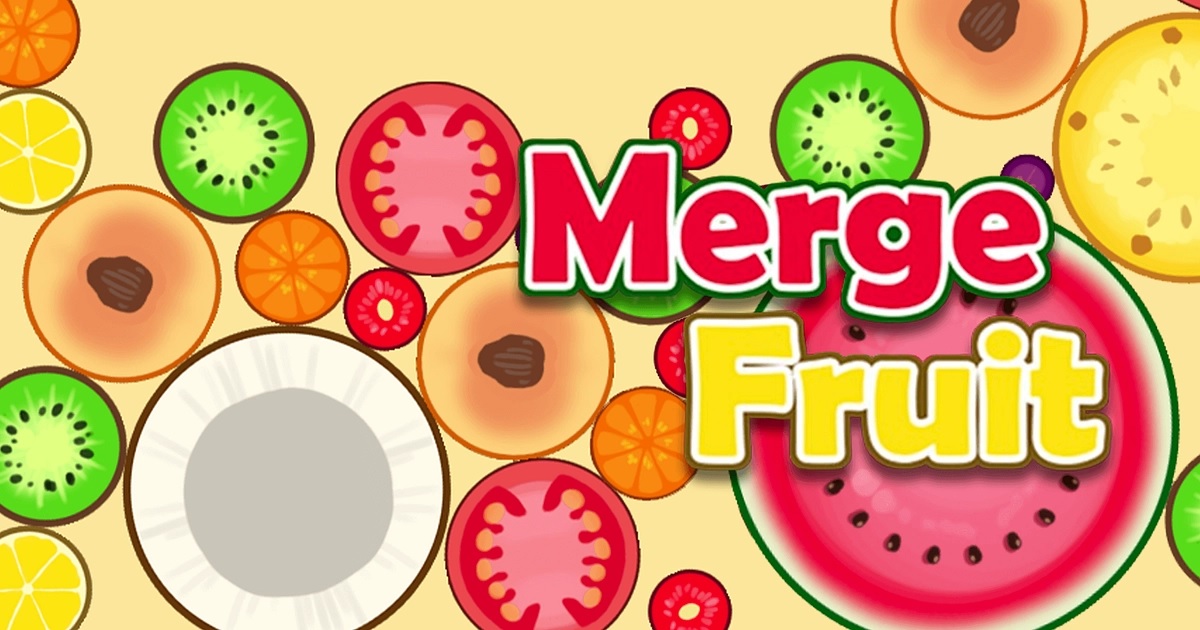
If you’ve ever longed for a game that’s simple yet addictive, this is the one for you. Picture a grid. Now imagine various fruits on it. Your task? Merge similar fruits and watch them evolve. Merge Fruit Game starts easy.
You’ll have a couple of fruits to pair. But don’t be fooled. As you progress, the challenges grow. You’ll find yourself strategizing. You’ll aim to create the best fruit combinations. Every level will push you. It asks you to think differently. And that’s where the fun truly begins.
But why choose this game over others? First, it’s visually delightful. The fruits are vibrant. They pop out and make the game aesthetically pleasing. Second, the mechanics are simple. A child can play it. An adult can master it. Yet, it appeals to both. The satisfaction of merging fruits and reaching new levels is universal.
Moreover, this game sharpens your mind. It’s not just about random merges. It’s about planning your next move. It’s about optimizing your grid space. So while you’re having fun, you’re also training your brain.
In a digital age filled with complex games, Merge Fruit Game stands out. It offers pure uncomplicated joy. It’s a reminder that sometimes the simplest ideas bring the most pleasure. Dive in. Let the fruits capture your imagination. And let the merging begin.
Master the Merge: A Simple Guide to Playing Merge Fruit!
With its vibrant graphics and captivating gameplay, has taken the gaming world by storm. It’s no surprise that many are flocking to play this simple yet engaging game. But how exactly do you play it? Let’s dive deep and peel back the layers.
The Basics of Gameplay

At its core, Merge Fruit is about combining identical fruits to form a newer, upgraded fruit. The game board is a grid, and the challenge lies in optimizing the space to make the most of every merge.
- Starting Small: Initially, you’ll see low-tier fruits on the grid. Begin by dragging and placing two of the same kind together. This merging action creates a superior fruit.
- Climbing the Ladder: As you continue to merge, the fruits evolve. The objective is to reach the highest tier fruit possible within the given moves or time.
- Strategy is Key: While the initial levels might feel straightforward, don’t let that fool you. As you advance, the grid fills up faster. You’ll need to think several moves ahead.
Controls: Navigating the Juicy Grid
The beauty of Merge Fruit lies in its uncomplicated control system.
- Drag & Drop: Simply tap on a fruit and drag it to its identical pair to initiate the merge.
- Swiping Action: Some versions allow swiping fruits to rearrange them, giving you more control over the board’s layout.
- Power-ups & Boosts: Occasionally, you might come across special items or fruits. Tapping on them can clear large sections of the board or grant extra moves.
Climbing the Fruity Ladder: Levels of Merge Fruit Explained
1. The Green Beginnings
Every player starts here. The board is fresh, filled mostly with low-tier fruits like apples and cherries. It’s the perfect playground to learn the basics, like merging identical fruits and optimizing grid space.
2. The Citrus Climb
As you progress, you’ll be introduced to the world of citrus fruits: oranges, lemons, and the occasional grapefruit. These levels might introduce new mechanics or obstacles, requiring more strategy than before.
3. Berry Heights
Reach this level, and you’re no novice! The grid gets populated with blueberries, strawberries, and raspberries. Expect special items to pop up, challenging you to think on your feet.
4. Tropical Twists
Now, things are heating up. You’ll encounter pineapples, coconuts, and mangoes. The levels here demand both skill and strategy, as the game introduces more complex merging patterns and limited moves.
5. The Exotic Elite
Only the best make it here. This is where you’ll see rare fruits like passion fruits, dragon fruits, and starfruits. With a denser grid and challenging gameplay mechanics, these levels are designed for the game masters.
6. Legendary Fruit Lands
The pinnacle of this game. These levels are not just about merging but about endurance, strategy, and quick thinking. With fruits of legend and myth, achieving success here solidifies your status as a Merge Fruit legend.
Fruitful Mastery: Top Tips and Tricks
- Start from the Corners: Begin your merges in corners and edges. It helps in controlling the flow of new fruits on the board.
- Plan Ahead: Don’t just merge; think a few moves in advance. Anticipate the next fruits that will appear on the board.
- Save Power-ups: Resist the urge to use power-ups immediately. Save them for more challenging moments or when they can have a bigger impact.
- Merge Higher-Tier Fruits First: If you have a choice, merge higher-tier fruits first. They free up more space and get you more points.
- Regularly Rearrange: Periodically rearrange the board, especially if you feel stuck. A fresh perspective can lead to more merging opportunities.
- Watch Tutorials & Walkthroughs: Many experienced players share their strategies online. These can offer insights into techniques you might not have considered.
- Avoid Random Merges: While it might be tempting to merge fruits quickly, random merges can fill up the board faster and may not be the most strategic move.
- Prioritize Challenges: Some levels have specific objectives or challenges. Focus on those first before making other merges.
- Practice Makes Perfect: The more you play, the better you’ll become. Familiarity with the game will naturally improve your strategy.
- Stay Updated: Game updates might introduce new features or change mechanics. Always keep your game updated and check patch notes for any changes.
Fruit Fusion Fun: Standout Features of Merge Fruit Game
- Vibrant Graphics: Dive into a visually captivating world where each fruit is designed with detail and pops with color, enhancing the overall gaming experience.
- Progressive Levels: From easy beginnings to legendary challenges, the game scales in difficulty, ensuring players remain engaged and constantly challenged.
- Intuitive Gameplay: This game boasts a user-friendly interface, making it accessible for both beginners and experienced gamers.
- Dynamic Board: Unlike static game boards, Merge Fruit offers an ever-changing grid, ensuring every game feels fresh and unpredictable.
- Special Power-ups: Discover and unleash unique power-ups that can turn the tide of the game, from clearing sections of the board to granting extra moves.
- Diverse Fruit Collection: The game isn’t limited to just basic fruits; as you progress, encounter exotic and mythical fruits, each with its own unique design and value.
- Interactive Tutorials: New to the game? No worries. The in-built tutorials guide players through the basics and introduce them to advanced strategies.
- Leaderboards & Achievements: Compete with players worldwide, strive for the top spots on leaderboards, and unlock special in-game achievements.
- Customization Options: Personalize your gaming experience with various themes, backgrounds, and soundtracks.
- Regular Updates: The game constantly evolves, with developers rolling out updates introducing new levels, fruits, and features.
People Also Asked
How do I start playing Merge Fruit?
Simply download the game from your device’s app store, launch it, and follow the in-game tutorial to begin your merging adventure.
Can I play game without an internet connection?
It can typically be played offline, but some features like leaderboards or daily rewards might require an internet connection.
Are there in-game purchases?
While the basic game is free, there are usually in-game purchases available, ranging from power-ups to ad removal.
How do I progress to higher levels?
Progress by merging fruits to achieve level objectives. As you complete levels, you’ll unlock more challenging stages.
Is there a way to reset my progress in the game?
Most versions allow a progress reset via the game’s settings, but always ensure your game data is backed up if you don’t want to lose it.
Fruitful Discoveries Await
In the vibrant world of Merge Fruit, every player embarks on a unique journey. Starting with simple matches, the game quickly evolves. You’ll find yourself strategizing. Every merge becomes a step toward greater challenges. But remember, it’s not just about reaching the top. The joy is in the journey itself. As you explore each level, the game offers countless surprises.
People Also Searched For
- Slope Unblocked Games
- Moto X3m
- 1v1.lol Unblocked 66
- Fireboy And Watergirl Unblocked
- Happy Wheels Unblocked Games
- Minecraft Unblocked Games 66
- Drift Hunters Unblocked
- Tunnel Rush Unblocked
- Eggy Car Unblocked 66
- Google Baseball Unblocked
- Fall Boys Unblocked
- Bouncy Rush
- Cookie Clicker Unblocked Games
- Pixel Combat 2
- Little Alchemy 2
- Subway Surfers Unblocked
- Planet Clicker 2
- Retro Bowl Unblocked
- Big Tower Tiny Square Unblocked
- Rooftop Snipers Unblocked
- Getaway Shootout Unblocked
- Papa’s Cheeseria
- Heardle Game
- Iron Snout Unblocked
- Basketball Legends
- Flappy Bird Unblocked
- Highway Racer
- Geometry Dash Unblocked
- Crazy Shooters
- Basketball Stars Unblocked
- Rummy Wealth
- Among Us Unblocked
- 8 Ball Pool Unblocked
- Garden Tales
- Mahjong Connect
- Coin Clicker
- Tetris Unblocked
- Chess Unblocked
- Stickman Hook Unblocked
- Mario Unblocked
- Tiny Fishing Unblocked
- Bob The Robber Unblocked
- Fortnite
- io Unblocked Games
- 2048 Unblocked
- Cricmania
- Smash Karts Unblocked
- Drive Mad Unblocked
- Tallman Run
- Monkey Mart
- Snow Rider 3D Unblocked
- Unblocked Games WTF
- Unblocked Games
- Crossy Road Unblocked
- Cat Ninja Unblocked
- Slither.io Unblocked
- Penalty Shooters 2
- Worlds Hardest Game Unblocked
- Vex 3 Unblocked
- Ping Pong Unblocked
- Backflip Maniac
- Unicycle Hero Unblocked
- Rocket League Unblocked
- Game Online Gratis
- 66 Unblocked Games
- Google Tic-Tac-Toe
- hole io unblocked
- FNF Unblocked
- Cricket Legends
- Pacman 30th Anniversary
- Pacman Unblocked
- Fly or Die
- Bitlife Unblocked
- Sausage Flip Unblocked
- Drift Boss Unblocked
- Madalin Stunt Cars 2 Unblocked
- Paper io Unblocked
- Granny Unblocked
- krunker.io unblocked
- G Switch
- Temple of Boom
- Shell Shockers Unblocked
- Eaglercraft
- Pocket Emo
- Rolling Ball 3D Unblocked
- Blackjack Unblocked
- Roblox Unblocked
- Traffic Jam 3D
- Tomb Runner
- Super Smash Flash 2 Unblocked
- Unblocked Games 911
- Yummy Tales 2
- Block Champ
- Dinosaur Game Unblocked
- Moto Road Rash 3D Unblocked

Sports betting used to be fairly functional. You opened a market, picked a team or player, placed the bet and left. The platform itself did not need much personality because the sport was doing most of the work. That has changed. Modern sportsbooks are competing not only on odds, but on how the whole product feels. Navigation, personalisation, live updates and account features now shape the betting experience almost as much as the markets themselves. For players who are used to games that react quickly and remember what they like, a sportsbook that feels slow or badly organised can seem dated almost immediately.
The interface has to get out of the way
Gaming platforms learned this years ago. If a menu is confusing, people stop using it. If important information is buried, the experience feels heavier than it should. Sportsbooks face the same problem. A football bettor may want one league, one match and one market. They should not have to scroll through twenty unrelated competitions first. The better platforms make common actions obvious and keep the bet slip close without filling the screen with noise. That sounds basic, but it is one of the biggest differences between an average sportsbook and a more premium betting product.
Personalisation is becoming part of the service
Games often remember what players opened last, which modes they use and where they left off. Sport betting is moving in the same direction. A regular bettor might prefer Premier League football, tennis and live basketball. There is little reason to show them the exact same homepage as someone who follows cricket and esports. Personalised promotions and more relevant market suggestions can make the betting experience feel less generic, especially for customers who use the same platform every week. That is also where premium betting starts to mean something beyond a larger bonus. If the service is genuinely premium, it should know enough about the customer to make the account easier to use.
Live betting has changed the pace completely
Pre-match betting is still important, but live markets have made sportsbooks much more dynamic. Prices change. Markets open and close. A match that looked uninteresting before kickoff can suddenly become the one everyone is watching. That creates a much more game-like pace. The user is not simply reading a static list anymore. They are following an event that keeps changing, with the interface updating around it. For that to work well, speed matters. So does clarity. A platform can have hundreds of live markets and still feel poor if the user cannot find the one they want quickly enough.
Premium betting is really about consistency
The word “premium” gets used too easily. It should not only mean VIP branding or an exclusive promotion. A premium betting experience is usually built from smaller things working properly every time: reliable account access, clear payments, responsive support, relevant offers and a sportsbook that does not feel cluttered. The more often somebody uses the platform, the more those details matter. The welcome offer is remembered for a few days. A frustrating interface is remembered every weekend.
The sportsbook is becoming part of the entertainment
This is probably the biggest change. The sport is still the reason people arrive, but the platform now shapes how they follow it. A good sportsbook can make a busy Saturday easier to navigate. A poor one can make even a simple bet feel like work. That is why sports betting platforms are starting to borrow more from gaming design. They are no longer only places where a bet is placed. They are becoming part of the overall betting experience.

Rummy has made the move to mobile particularly well. A game that once meant finding a deck, a table and enough people to play can now be practised on an Android phone in a few minutes.
But searching for a rummy app can quickly become confusing. There are different rule sets, different numbers of cards, online and offline modes, and apps that use the word “rummy” for games that are quite different from the Indian 13-card format.
Before installing anything, it helps to know exactly what you are looking for.
Start With the Rummy Variant
The first thing to check is the version of rummy offered by the app.
For players familiar with Indian Rummy, the important phrase is usually 13-card rummy. Each player receives 13 cards and tries to arrange them into valid sequences and sets.
A typical winning arrangement requires at least two sequences, including a pure sequence. A pure sequence contains consecutive cards of the same suit without using a joker as a substitute.
This matters because an app built around another rummy variant may have different card counts, scoring rules or requirements for a valid declaration.
Check What the Download Page Actually Tells You
A useful app page should provide more than a download button.
Before installing, look for basic information such as:
- Android compatibility
- app version and file details
- the rummy format included
- installation instructions
- whether an internet connection is required
- gameplay or rules information
Players specifically looking for a traditional Android version can use a Rummy Download page that explains the 13-card Indian Rummy format alongside the app information.
That context is useful because it lets you understand the game before installing it instead of discovering the rules after opening the app.
Understand Sequences Before Your First Game
The sequence system is one of the most important parts of 13-card Indian Rummy.
A sequence is a group of consecutive cards from the same suit. For example:
5♥ – 6♥ – 7♥
is a straightforward sequence.
A pure sequence follows the natural order without replacing a missing card with a joker. An impure sequence can use a joker where the rules allow it.
New players often concentrate on making sets and overlook the pure-sequence requirement. Learning this distinction before playing makes the first few games much easier to follow.
Sets Are Different From Sequences
A set normally contains cards of the same rank but different suits.
For example:
8♣ – 8♦ – 8♥
forms a set.
The difference sounds simple, but it becomes important when sorting 13 cards on a small mobile screen. A good rummy interface should make it easy to rearrange cards and identify possible groups without obscuring suits or ranks.
Look at the Interface, Not Just the Graphics
Card games do not need complicated graphics to work well on mobile. Clarity matters more.
Cards should be large enough to read, suits should be easy to distinguish and controls should not cover important parts of the hand. Sorting and grouping cards should also feel natural.
This becomes particularly important on smaller Android devices, where an interface designed mainly for large screens can make a simple card game unnecessarily difficult to use.
Check Android Compatibility
Not every Android device runs the same operating-system version or has the same amount of storage available.
Before downloading, check whether the app supports your Android version and whether there is enough free space on the device.
If an Android package is being installed directly rather than through an app store, the phone may also ask for permission to install an app from that particular source. Android users should review the file source and requested permissions before continuing.
An ordinary card game should not need access to unrelated parts of the phone simply to deal cards and record gameplay.
Online and Offline Play Are Not the Same
Another detail worth checking is whether the app requires a constant internet connection.
Offline play can be useful for practising card grouping, learning sequences and becoming familiar with the interface. Online modes may add multiplayer features but naturally depend on network availability.
Neither format is automatically better. The useful option depends on whether you want to learn the rules, practise independently or play with other people.
Learn the Game Before Playing Quickly
Mobile interfaces make it easy to move through a card game quickly, but speed is not particularly useful when the underlying rules are unclear.
New players are better served by first understanding:
- how the 13 cards are dealt,
- what qualifies as a pure sequence,
- how impure sequences work,
- how sets are formed, and
- what makes a declaration valid.
Once those basics are familiar, the digital version becomes much easier to follow.
Final Thoughts
A good Android rummy experience starts before the first hand is dealt.
Check that the app actually supports the rummy variant you want, understand its sequence and set rules, confirm Android compatibility and read the installation information rather than choosing an app based only on its name or screenshots.
For 13-card Indian Rummy in particular, understanding the pure-sequence rule is the best place to start. Once that foundation is clear, both the cards and the mobile interface become considerably easier to manage.

An online casino used to feel much more like a website you visited with a game already in mind. You wanted roulette, so you found roulette. You wanted a slot, so you went into the slot section and picked one. Casino apps have changed that behaviour. Now a lot of the experience happens before the game even opens.
The lobby has become part of the entertainment
A modern casino app can hold hundreds of titles, which creates a strange problem. Having more games sounds useful until you actually have to choose one. That is why the lobby has become much more important. New releases sit beside popular games. Recently played titles come back to the front. Live casino has its own area, and slots may be broken into smaller groups rather than thrown into one enormous list. The app is not only storing games anymore. It is helping people decide what to open.
Phones encourage more jumping between games
Desktop casino sessions can feel more settled. On a phone, switching takes almost no effort. A player might open Aviator for a few rounds, move into a slot, check a live blackjack table and then return to something they played earlier. That kind of movement suits apps because the whole casino stays close. There is no need to open another browser tab, search again or reload the homepage every time. Once someone chooses a bet app download, that convenience becomes one of the main reasons to keep using the app rather than returning to the browser.
Recently played may matter more than recommendations
Recommendation systems get plenty of attention, but one of the most useful features is much simpler. Remember what I played. Casino libraries are now large enough that finding the same game again can be surprisingly annoying. A recently played section solves that without needing complicated technology. It also fits the way people actually use entertainment apps. Streaming services remember unfinished shows. Music apps keep recent albums close. Casino apps are doing much the same thing with games.
Different games need different mobile treatment
Not every casino title fits naturally onto a phone. Slots usually adapt easily because most of the important action happens in the centre of the screen. Aviator is similarly compact. Roulette creates more trouble because the betting grid contains a lot of small areas. Live casino has to fit the dealer, table and controls into the same display without making any of them feel squeezed. That means the app cannot simply shrink every desktop game by the same amount. Good mobile design is more selective than that.
Game loading matters more when people browse
There is another consequence of moving between games more often. Loading time becomes noticeable. If every new title takes too long to open, browsing starts feeling like work. Apps therefore need to handle game launches smoothly, especially when titles come from several different providers. The technical side is mostly invisible when it works.
The casino app has become a game library in its own right
This is probably the bigger shift. People are not only using casino apps to access games they already know. They are using them to find the next one. The home screen, search, recently played list and game categories all influence what gets opened next. That makes the app itself part of the casino experience rather than just a container around it. The games still matter most. But increasingly, the way people discover those games matters almost as much.
-

 Finance3 years ago
Profitable Intraday Trading Advice For Novices
-

 Gaming3 years ago
Pixel Speedrun Unblocked Games 66
-

 Gaming4 years ago
Subway Surfers Unblocked | Subway Surfers Unblocked 66
-

 Internet3 years ago
Welcome to banghechoigame.vn – Your One-Stop Destination for Online Gaming Fun!
-

 Gaming4 years ago
Minecraft Unblocked Games 66 | Unblocked Games Minecraft
-

 Gaming4 years ago
Google Baseball Unblocked | Google Doodle Baseball Unblocked 66
-

 Gaming4 years ago
Tunnel Rush Unblocked | Tunnel Rush Unblocked 66
-

 Internet3 years ago
Premium Games Unblocked: Unleash Your Gaming Potential