

Finance
Navigating Retirement: Why Consulting a Financial Advisor Is Critical for Your Financial Health


Retirement planning is a complex journey spanning decades, involving various investment options, savings strategies, and life changes. The shifting economic landscape further exacerbates the intricacies of crafting a retirement plan that will withstand the test of time. To navigate these waters successfully, many turn to financial advisors for expertise. These professionals offer critical guidance on managing and growing retirement savings to ensure a secure financial future. In this article, we will explore the significance of their role and how they can facilitate a smoother transition into your golden years.
Understanding the Role of a Financial Advisor in Retirement Planning

The primary role of a financial advisor is to provide informed guidance on financial matters. For retirees, this means assistance in creating a comprehensive plan that addresses income, investments, taxes, and estate planning. A sound retirement plan is not just about saving enough money; it’s also about handling that money wisely through various economic climates and personal life changes. Residents of the Gem State may consider engaging with financial advisors in Boise Idaho, to gain local insights and develop strategies tailored to their specific financial landscape.
Financial advisors bring expertise in assessing an individual’s current financial situation and anticipating future needs. They consider factors such as life expectancy, desired lifestyle, and potential health care costs when advising clients. Their recommendations are bolstered by deep knowledge of financial markets and an understanding of how an individual’s financial picture fits into broader economic conditions.
Engagement with a financial advisor can also bring a sense of accountability to savers. These professionals help ensure clients remain disciplined about saving and investing for the future. Regular meetings with an advisor can help individuals stay on track to meet their long-term goals, despite the temptation to deviate from their financial plan.
Moreover, financial advisors are well-versed in the various retirement accounts and investment vehicles available to consumers. From IRAs to annuities, they can demystify the options and help retirees make informed decisions that align with their retirement vision. This level of tailored advice is vital in constructing a resilient retirement strategy.
Common Retirement Pitfalls and How Financial Advisors Can Help Avoid Them

When it comes to retirement, there are several pitfalls that could derail even the most meticulous plans. Common issues include underestimating life expectancy, overspending in the early years of retirement, and neglecting to plan for healthcare costs. These can be critical missteps, but they are also avoidable with proper guidance from a financial advisor.
Financial advisors can employ strategies such as setting conservative withdrawal rates, creating a retirement-specific budget, and integrating long-term care insurance into the financial plan. These steps can help safeguard against prematurely draining retirement funds. Moreover, they are specialists in identifying and managing retirement risks, helping clients avoid common traps.
Another potential pitfall is emotional investing, where retirees react hastily to market fluctuations. An advisor can provide the necessary perspective and advice to prevent emotional decision-making that often leads to untimely buying or selling. By maintaining a disciplined approach, financial advisors help stabilize the retirement journey amid unpredictable market volatility.
Evaluating Your Financial Health: When To Consult a Financial Advisor
The journey toward retirement is best navigated with periodic health checks of your financial plan. Consulting a financial advisor can provide these checks at critical junctures, such as when experiencing significant income changes, nearing retirement, or going through a life transition such as divorce or the loss of a spouse. These are times when an expert’s input can be invaluable in reassessing and adjusting your plan.
Moreover, it’s never too early to start working with a financial advisor. Those in the early stages of their career can benefit from advice on establishing a solid savings plan and making sound investment decisions. For those nearing retirement, an advisor can offer strategies to maximize retirement contributions and ensure financial stability in the years ahead.
Financial health also includes maintaining an emergency fund and appropriate insurance coverage. An advisor can assess these aspects of your financial life and recommend options to safeguard against unexpected events. Their advice could be the difference between a minor setback and a major financial crisis. This regional expertise can further enhance the relevance and effectiveness of one’s retirement strategy.
Partnering with a financial advisor is a prudent step for anyone serious about securing their financial future. They offer a wealth of knowledge and experience, personalized strategies, and support through market fluctuations and life’s transitions. Altogether, they are indispensable allies in crafting a retirement plan that provides peace of mind and financial security in the golden years.
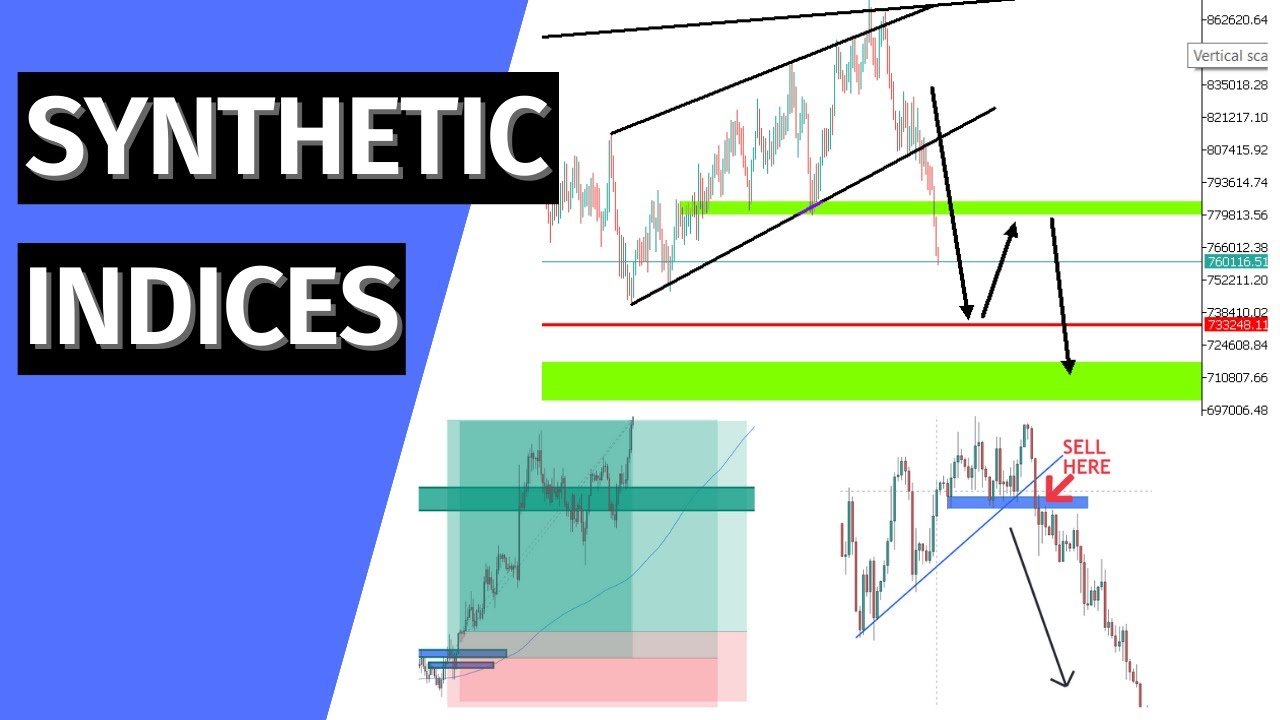
Synthetic indices traders need a well-planned strategy, proper risk management, and a good understanding of market movements to succeed. Beyond implementing a consistent trading decision, you should also master your prediction skills when it comes to determining whether prices will rise or fall. So, what is the best synthetic indices trading strategy? Well, the simplest answer is that there is no single approach that guarantees profits. The most effective strategy depends on your trading experience, preferred synthetic index, market conditions, and risk tolerance.
What Are Synthetic Indices?
Synthetic indices are simulated financial markets designed to replicate certain market behaviors without being influenced by real-world economic events or traditional financial markets. They are generated using algorithms and are available for trading around the clock, depending on the broker’s offerings.
Popular examples include Volatility 10, Volatility 25, Volatility 50, Volatility 75, Boom, and Crash indices. Understanding how these markets behave is essential before choosing a synthetic indices strategy.
Top 4 Best Synthetic Indices Trading Strategies
Here are some effective synthetic indices trading strategies that both beginners and professed traders can consider.
- Breakout Trading Strategy
Breakout trading involves entering the market when prices move beyond established support, resistance, or consolidation zones.
For instance, when a synthetic index breaks above a resistance level with strong momentum, traders may consider a buying position. However, not every breakout produces a sustained movement. Waiting for a candle to close beyond the breakout level can help reduce exposure to false breakouts.
Traders looking for additional educational resources and useful tips on synthetic indices should consider visiting Syntxwiki. This platform provides information about synthetic indices trading strategies, trading education, and other opportunities to explore, including synthetic indices copy trading strategies.
- Scalping Strategy
Scalping involves opening and closing multiple trades within short periods to capture relatively small price movements.
This approach may appeal to traders who prefer fast-paced trading activities. Successful scalping requires discipline, quick decision-making, and careful attention to transaction costs. Traders should also avoid taking unnecessary positions simply because they want to trade frequently.
- Moving Average Crossover Strategy
The moving average crossover strategy uses two moving averages to identify possible changes in market direction. A bullish crossover occurs when a shorter-period moving average crosses above a longer-period moving average. A bearish crossover happens when the shorter moving average crosses below the longer one.
- Price Action Trading Strategy
Price action trading involves studying candlestick patterns and market structure without relying heavily on complicated indicators. Traders observe formations such as pin bars, engulfing candles, and inside bars to identify potential market reversals or continuation opportunities.
This synthetic indices trading strategy requires patience and practice because traders must learn how to interpret price behaviour across different market conditions.
Trend following, support and resistance, breakout trading, scalping, moving average crossovers, and price action trading strategies all offer different approaches to analysing synthetic markets. However, traders should practise using demo accounts, develop clear entry and exit rules, use appropriate stop-loss levels where available and avoid risking money they cannot afford to lose. Ultimately, successful trading synthetic indices requires patience, continuous learning, discipline, and responsible risk management.

How many companies do you know that have serious growth potential, but aren’t growing?
Instead of scaling like their founders know they can, teams are bogged down with messy processes, chaotic planning cycles and disconnected departments. Not only does it drain the life out of what could be a dynamite company culture, but it also costs businesses serious money each month.
There’s a lot going on in most businesses. But keeping your departments siloed isn’t doing you any favours (financially or otherwise).
And here’s the best part…
Streamlining operations:
- Is one of the quickest ways to start saving money
- Has been proven to increase profitability
…and begins with a little thing called cross-functional planning.
Why Disconnected Operations Cost You Money
Here’s a picture of what’s happening at most companies these days.
Sales team is planning. Ops team is planning. Finance team is over there doing… finance things.
Nobody is communicating. Every department has their own KPIs, their own data and their own version of what needs to happen next quarter.
Disconnected teams create massive amounts of waste.
Sales forecasts that don’t align with production schedules lead to excess inventory (or none at all). Finance doesn’t have any visibility on operational costs which leads to unrealistic budgets. Marketing launches a promotion that Supply Chain has no way of keeping up with…
These are costly problems. Research from Airtable and Forrester shows that silos, inaccurate data and manual processes cost companies revenue – and that improving collaboration across functions can save teams up to 12 hours per week.
Priceless.
How Cross-Functional Planning Changes Everything
Cross-functional planning means exactly what it sounds like.
Every department (sales, operations, finance and supply chain) planning based on the same data, the same goals and the same forecast.
Planning doesn’t have to be a one-department-team sport. Getting every key player in the room to collaborate improves every aspect of your business.
Here’s how.
If every department is planning based on the same numbers, decisions can be made quicker. Accurate forecasts can be produced. Budgets are aligned and resources can finally be allocated where they need to go.
The result?
Less waste. Fewer unexpected surprises. And more money in the bank.
Not only is sales and operations planning software making cross-functional planning more accessible, but it’s connecting teams like never before. Instead of working from their own separate plans (hello spreadsheet jungle), S&OP software ties it all together so everyone is literally working from one plan.
Boom.
Companies that take the time to plan across departments end up saving money in the long-run and are able to make better business decisions because they finally have a clear view of how every department contributes to the company’s bottom line.
The Financial Impact Of Streamlining Operations
Ok, but how does streamlining operations actually impact the bank account?
When companies make the effort to tighten up their operations, a few things happen.
Costs decrease: Duplicate tasks across departments are eliminated and manual tasks that take hours of employees’ time are automated.
Cash flow improves: Because everyone is planning together with more accurate forecasts, inventory is managed more efficiently and less capital is tied up in inventory that isn’t selling.
Revenue increases at a much faster rate: Teamwork makes the dream work – or at least helps products hit the market quicker and improves customer experience, leading to repeat buyers and organic growth.
Companies with streamlined financial operations saw finance costs 32% lower as a percentage of revenue than companies who didn’t, according to research from APQC.
That is a competitive edge most companies don’t realize they could have just by streamlining operations.
Forward-thinking companies who adopt cross-functional planning don’t just save money, they scale faster, weather storms better and win the market.
4 Ways To Start Streamlining Operations Today
The “why” is covered. Now for the solutions.
Here are four ways you can start streamlining your operations and saving your company money today.
Stop Working In Silos
This should come as no surprise. But if departments aren’t communicating with each other on a weekly (or monthly) basis nothing will change.
Once a week sales, operations, finance and supply chain get in a room together and talk about what’s going on. Sharing what they know about the next quarter and what their departments need to succeed is critical to breaking down the silos.
You can’t streamline what you don’t see.
Centralize Your Data
Data should never be stuck in an Excel spreadsheet only your finance team knows how to read.
Take a look at your current processes and figure out where you can centralize data so everyone has access to the same information. Doing this alone can save you hours of meetings and reduce errors.
There’s no excuse not to have a single source of truth these days.
Automate Whenever Possible
If it’s a task that you’re doing more than once a month, there’s probably a way to automate it.
Any time you can eliminate tedious manual tasks and have your systems do the heavy lifting for you, you’re one step closer to streamlined operations. Spend some time this week going through your current processes and making a list of what to automate. There are tons of tools out there that can help you do everything from inventory planning to financial reporting. And if you aren’t sure where to start, chat with your software vendors and ask.
Automation has to happen.
Invest In Software That Does What It Promises
Technology is cheap these days but that doesn’t mean you should buy every SaaS software that promises to make your life easier.
When looking for tools to help you streamline your operations, make sure the software you choose brings your departments together instead of creating more silos. You want real-time visibility, scenario planning and collaborative forecasting – and it shouldn’t feel like purchasing ten different software solutions to get there.
Keep. It. Simple.
Stop Throwing Money Away
Listen, streamlining your operations and tearing down departmental silos isn’t a “nice-to-have” goal. It’s the single smartest financial decision your business will make.
Disconnected departments cause unnecessary waste. When every team is planning from one unified plan, everyone wins.
Cross-functional planning is the foundation of every streamlined business. Without it, every other process you try to improve will be more difficult and expensive.
And the businesses that reap all the rewards are the ones who get their operations dialed-in first.
Make streamlining your operations a priority this year. You’ll thank yourself later.
Your bank account will too.
You’ve got cash in your pocket and curiosity in your head.
Maybe you just heard someone mention Bitcoin. Maybe you saw the price move and thought, Why not try buying a little? Either way, the moment arrives.
Now comes the decision.
Do you open an online crypto exchange… or do you search for the nearest Bitcoin ATM?
Both paths lead to the same destination—owning Bitcoin. But the journey? Very different. Especially if what you’re holding is physical cash.
Let’s compare.
The Exchange Route: Powerful… But Not Exactly Instant
Online exchanges are the standard gateway into cryptocurrency. They’re packed with tools—price charts, trading pairs, limit orders, market depth graphs. Great for experienced traders.
But speed? That depends.
First step: create an account.
Second step: verify your identity.
Third step: connect a payment method.
Fourth step: wait for funds to arrive.
Each step makes sense from a security and regulatory perspective. But it also adds time. Sometimes hours. Sometimes days.
And here’s the kicker: if you’re starting with physical cash, you can’t even begin until that cash becomes digital money inside a bank account.
Deposit cash → transfer to exchange → wait → finally buy Bitcoin.
Efficient? Eventually.
Fast? Not always.
The “Nearest Bitcoin ATM” Option
Now imagine a different scenario.
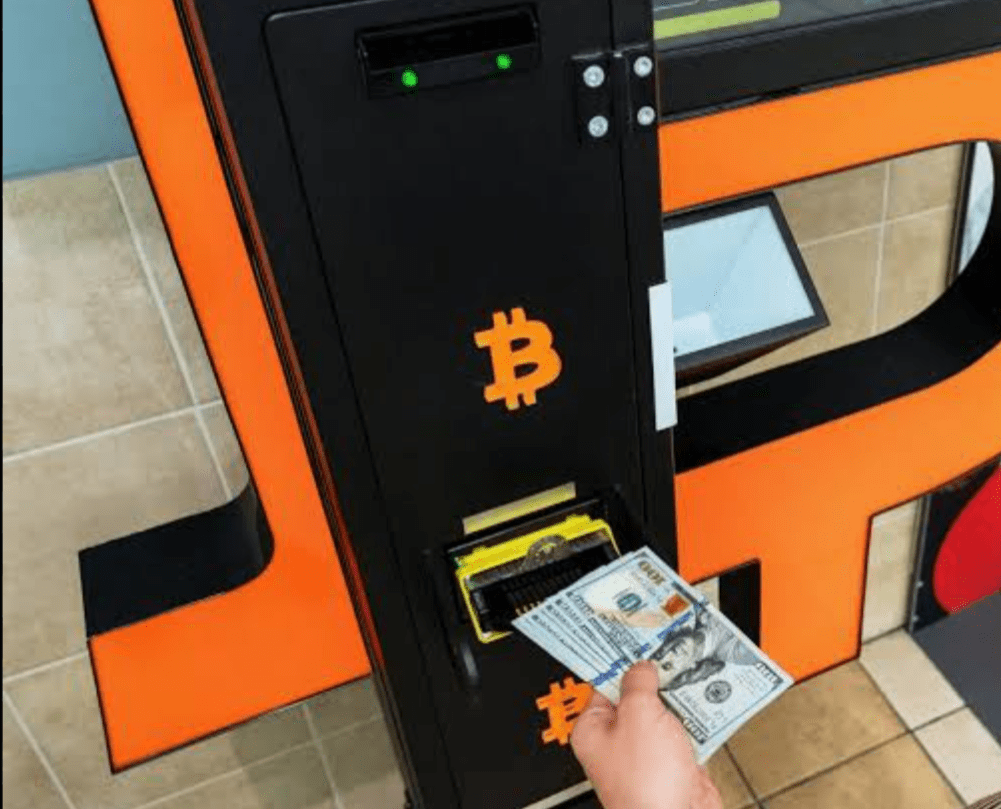
You’re standing in a convenience store grabbing a drink when you notice something unusual near the wall: a Bitcoin ATM.
That moment happens more often now than people realize. These machines are popping up in everyday places—gas stations, grocery stores, shopping centers.
Which means instead of opening five browser tabs and linking accounts, you simply search nearest Bitcoin ATM on your phone.
And suddenly the path gets much shorter.
Walk up to the machine.
Scan your crypto wallet QR code.
Insert cash.
Confirm the transaction.
Done.
The machine sends Bitcoin directly to your wallet, often within minutes.
No banking detours. No waiting for funds to clear.
Cash Changes the Speed Equation
Here’s where the real difference shows up.
Online exchanges move money digitally. That means banks sit in the middle of the process. And banks—lovely as they are—tend to operate on schedules.
Weekdays. Processing times. Settlement periods.
A nearest Bitcoin ATM bypasses that step completely because the machine accepts cash directly.
Think of it like the difference between wiring money internationally versus handing someone cash in person.
Both work. One is simply faster.
For people holding physical bills and wanting crypto quickly, the ATM usually wins.
Convenience vs. Capability
To be fair, exchanges and Bitcoin ATMs serve slightly different purposes.
Exchanges are built for depth. They allow users to trade multiple cryptocurrencies, monitor market movements, and manage larger portfolios. If you plan on actively trading, an exchange platform is hard to beat.
Bitcoin ATMs, on the other hand, focus on simplicity.
No charts. No order books. No advanced financial features.
Just a straightforward conversion: cash into Bitcoin.
Sometimes that’s exactly what people want—especially the first time they try cryptocurrency.
A Quick Reality Check
Let’s run a small thought experiment.
You have $200 in cash right now. You want Bitcoin today.
With an exchange, you’d first need to deposit that cash into a bank account, transfer it to the exchange, and wait for it to clear.
With the nearest Bitcoin ATM, you could complete the entire process during a quick stop at the store.
Minutes versus hours—or even days.
That’s the difference.
Why Both Options Still Matter
The debate isn’t really about which method is “better.” It’s about which method fits the situation.
If you’re trading frequently or managing a portfolio, online exchanges provide powerful tools and flexibility.
But if the goal is quick access—especially with cash in hand—the nearest Bitcoin ATM offers one of the fastest paths into cryptocurrency.
Sometimes convenience wins.
Sometimes speed matters more than features.
The Bottom Line
Both online exchanges and Bitcoin ATMs play important roles in the crypto ecosystem.
Exchanges provide advanced functionality and deep market access. Bitcoin ATMs provide immediate, real-world entry into digital currency.
But when someone asks a simple question—Which option is faster for local cash?—the answer is usually clear.
The nearest Bitcoin ATM.
Because sometimes the quickest way to join the crypto economy isn’t through a website.
It’s through a machine right around the corner.




Six Open-World Gaming Habits to Bring Into GTA 6
Click to rate this post! [Total: 0 Average: 0] A quick browser game usually gives you a clear objective within...


Every Gun in Counter-Strike 2: A Beginner’s Guide to Weapon Categories
Click to rate this post! [Total: 0 Average: 0] Walking into the buy menu for the first time can feel...


The Best Browser Games for Short Breaks at School or Work
Click to rate this post! [Total: 1 Average: 5] For a short break, start with Tic-Tac-Toe or Reaction Duel if...


Mathematical Dissections of Instant Multiplier Calculations and Linear Ramping Mechanics in Crash Games
Click to rate this post! [Total: 0 Average: 0] Modern web applications require powerful and efficient architectures to deliver fast,...


How Indie Game Studios Can Work with Twitch Streamers When Launching a New Game
Click to rate this post! [Total: 0 Average: 0] For an independent game studio, a launch stream can introduce a...


What Players Often Overlook Before Trying Yono Rummy for the First Time
Click to rate this post! [Total: 0 Average: 0] The first game can be surprisingly different from what you imagined....


Why sports betting platforms are starting to feel more like gaming platforms
Click to rate this post! [Total: 0 Average: 0] Sports betting used to be fairly functional. You opened a market,...


Rummy on Android: What to Check Before Downloading a 13-Card Rummy App
Click to rate this post! [Total: 0 Average: 0] Rummy has made the move to mobile particularly well. A game...


Casino Apps Are Changing the Way People Discover Games
Click to rate this post! [Total: 0 Average: 0] An online casino used to feel much more like a website...


Roobet Promo Code – What Exclusive Bonus Does It Unlock?
Click to rate this post! [Total: 0 Average: 0] Crypto casinos look similar until the welcome package is unpacked. Sign-up...

The Pros and Cons of Living in a House or a City Apartment
Six Open-World Gaming Habits to Bring Into GTA 6
Every Gun in Counter-Strike 2: A Beginner’s Guide to Weapon Categories

What Is the Best Synthetic Indices Trading Strategy?
The Best Browser Games for Short Breaks at School or Work
Mathematical Dissections of Instant Multiplier Calculations and Linear Ramping Mechanics in Crash Games

Why Modern Sports Prediction Platforms are Emulating Casual Browser Game Design Principles

How Penetration Testing Helps Businesses Strengthen Their Cybersecurity
How Indie Game Studios Can Work with Twitch Streamers When Launching a New Game

Where to Turn When You’re Looking for a Reliable Cryogenic Transportation Company
-

 Finance4 years ago
Profitable Intraday Trading Advice For Novices
-

 Gaming3 years ago
Pixel Speedrun Unblocked Games 66
-

 Gaming4 years ago
Subway Surfers Unblocked | Subway Surfers Unblocked 66
-

 Internet4 years ago
Welcome to banghechoigame.vn – Your One-Stop Destination for Online Gaming Fun!
-

 Gaming4 years ago
Minecraft Unblocked Games 66 | Unblocked Games Minecraft
-

 Gaming4 years ago
Google Baseball Unblocked | Google Doodle Baseball Unblocked 66
-

 Gaming4 years ago
Tunnel Rush Unblocked | Tunnel Rush Unblocked 66
-

 Internet3 years ago
Premium Games Unblocked: Unleash Your Gaming Potential