

Gaming
International Casino Operators Expanding into Canada: Key Trends and Regulatory Insights


Canada has rapidly become one of the most attractive markets for international casino operators. Provincial regulation, clear licensing frameworks, and a tech-savvy population of over 27 million active players have transformed the country into a prime destination for global gaming companies. Ontario’s regulated iGaming market, launched in 2022, demonstrated how demand could shift into legal channels quickly and efficiently.
International operators are drawn to Canada because the rules are transparent and responsibilities are clearly divided among provinces. This makes market entry more predictable compared to jurisdictions with centralized or unclear regulations. Alberta and Ontario have both shown that well-defined frameworks can attract serious investment while maintaining proper oversight.
The expansion is not just about favourable regulations. You are part of a market with high internet penetration, widespread smartphone use, and a population comfortable with digital payments. As more provinces refine their approaches and international companies continue to enter, the Canadian gaming landscape is evolving into one of North America’s most dynamic and competitive environments.
Growth Drivers in the Canadian Gaming Industry
The Canadian gaming industry generated CA$3.2 billion in gross gaming revenue during the 2024-2025 fiscal year in Ontario alone, representing a 32% increase year-over-year. Total wagers reached CA$82.7 billion, up 31% from the previous period.
Several factors fuel this expansion. Mobile gaming dominates player engagement, with over 1.09 million active monthly players in Ontario accessing platforms through smartphones and tablets. Casino gaming accounts for approximately 78% of total iGaming revenue, with sports betting and peer-to-peer poker comprising the remainder.
The demographic shift towards digital-first consumers has accelerated market growth. Canadian players increasingly prefer the convenience of regulated online platforms over travelling to physical casino locations. This preference, combined with improved internet infrastructure and smartphone penetration, creates favourable conditions for international operators.
Provincial markets beyond Ontario show significant potential. Alberta’s passage of Bill 48 establishes the Alberta iGaming Corporation to oversee private-sector operators, with a soft launch anticipated by late 2025 and full market opening expected in Q1 2026.
Regulatory Landscape and Provincial Oversight
The Alcohol and Gaming Commission of Ontario (AGCO) works alongside iGaming Ontario (iGO) to maintain rigorous oversight of operators. The iGaming Ontario Act, passed in May 2025, transformed iGO into an independent agency, separating regulatory functions from political influence and provincial financial interests.
Regulated iGaming requires operators to meet stringent licensing criteria:
- Comprehensive background checks on operators and key personnel
- Anti-money laundering protocols meeting federal standards
- Player protection measures including deposit limits and time restrictions
- Regular audits of game fairness and payout percentages
Each province maintains distinct regulatory approaches. British Columbia operates through the British Columbia Lottery Corporation (BCLC), which manages both land-based and online gaming under a single provincial framework. Saskatchewan operates gaming through the Saskatchewan Indian Gaming Authority, which oversees First Nations casino operations.
Provincial oversight ensures tax revenue supports public services. Ontario’s tax structure directs iGaming revenue towards education, healthcare, and social programs, creating political support for continued market expansion.
Entry Strategies and Notable Market Entrants
BetMGM, backed by MGM Resorts International, established BetMGM.ca as a major presence following Ontario’s market opening in April 2022. The operator invested heavily in marketing partnerships with local sports teams and developed mobile-optimized platforms featuring slots, table games, and live dealer options.
High Roller Technologies submitted an Internet Gaming Operator licence application in 2025, targeting a second-half launch with HighRoller.com. The company focuses on premium experiences for high-stakes players, differentiating itself from mass-market competitors.
International operators typically pursue these entry strategies:
White-Label Partnerships: Operators collaborate with established Canadian brands to expedite market entry while meeting regulatory requirements.
Direct Licensing: Large operators apply for provincial licences directly, investing in local infrastructure and compliance teams.
Acquisition: Companies acquire existing Canadian operators or partner with provincial gaming corporations to leverage established customer bases.
Content providers like RubyPlay supply games to multiple operators, enabling rapid deployment across platforms while maintaining compliance with provincial gaming standards.
Payment Methods and Technology Integration for Online Casino
Interac e-Transfer dominates deposit and withdrawal transactions among Canadian players, offering instant bank-to-bank transfers without credit card fees or international processing delays for online casino platforms. This payment method processed over 60% of online casino transactions in Ontario during 2024.
Alternative payment options include:
Payment Method Processing Time Typical Limits Interac e-Transfer Instant $3,000-$10,000 per transaction Credit/Debit Cards 1-3 business days $500-$5,000 per transaction Bank Wire 3-5 business days $10,000+ per transaction Cryptocurrency Instant to 24 hours Varies by operator
Mobile optimization remains essential. Operators develop native iOS and Android applications alongside responsive web platforms, ensuring seamless gameplay across devices. Geolocation technology verifies players are physically located within licensed provinces when accessing gaming platforms.
Live dealer technology integrates HD video streaming with real-time betting interfaces, replicating land-based casino experiences. Canadian players show strong preference for live blackjack and baccarat tables staffed during North American peak hours.
Responsible Gambling and Player Safety Measures
The Canadian gaming industry implements comprehensive responsible gambling initiatives to protect vulnerable players. All operators licensed in regulated gambling markets must integrate these protections:
Centralized self-exclusion programs allow players to ban themselves across all licensed operators within a province. Ontario’s system shares exclusion data among operators, preventing excluded individuals from creating accounts on different platforms.
GameSense integration provides mandatory educational resources accessible from every gaming platform. Players receive information about odds, bankroll management, and warning signs of problem gambling before making their first deposit.
Real-time monitoring systems track betting patterns to identify problematic behaviour. When algorithms detect concerning patterns—such as chasing losses or excessive session lengths—operators trigger automatic interventions including mandatory breaks and deposit limit reminders.
Operators must display prominently:
- Links to provincial problem gambling helplines
- Deposit, loss, and session time limits settings
- Reality checks showing time elapsed and money wagered
- Access to voluntary self-exclusion tools
Future Outlook for Canada’s Casino Market
Canada’s iGaming revenue is projected to nearly triple by 2030 as additional provinces launch regulated markets. Alberta’s anticipated 2026 launch will test whether Ontario’s model translates to provinces with different demographic profiles and gambling traditions.
International operators continue evaluating entries into British Columbia, Quebec, and Atlantic provinces. Each market presents unique regulatory challenges, with Quebec maintaining protectionist policies favouring Loto-Québec’s digital monopoly.
Competition among operators will intensify as market saturation increases in Ontario. Operators will differentiate through exclusive game content, enhanced mobile experiences, and loyalty programs offering tangible rewards beyond bonus credits.
The Canadian gaming industry faces evolving regulatory scrutiny around advertising practices. Provincial regulators are considering restrictions on celebrity endorsements and limits on promotional spending to reduce gambling’s normalization among younger demographics.
Technology integration will advance with augmented reality casino experiences and blockchain-based payment verification systems that enhance transparency and security. Artificial intelligence will further refine personalized gaming recommendations while strengthening fraud detection and responsible gambling interventions.

A quick browser game usually gives you a clear objective within seconds. A large open-world adventure asks you to make more decisions: where to go, what to practise and how much time to spend exploring.
As players prepare for Vice City, searches for editions, platform information and GTA 6 accounts address the question of access. Once you start playing, your everyday habits shape the experience.
These six approaches can help you settle into GTA 6 without turning your first sessions into a race through someone else’s checklist.
1. Learn the controls before chasing efficiency
Give yourself time to become comfortable with movement, camera control and the actions introduced during the opening.
Read prompts instead of dismissing them automatically. If a camera setting or control option feels uncomfortable, explore the available settings before frustration becomes part of every encounter.
Practise one unfamiliar action at a time. Trying to memorise everything immediately can make a straightforward introduction feel more complicated than it needs to be.
The goal is to reach a point where you can pay attention to the world instead of constantly looking down at the controller.
2. Build map awareness gradually
A large map becomes easier to understand when locations connect to something you remember.
Notice distinctive buildings, major roads and changes in the landscape. After a journey, try recalling how the destination relates to the area where you started.
Use navigation tools to support that understanding, rather than following directions without observing your surroundings.
This habit transfers across open-world games. Recognising a route or neighbourhood makes later journeys feel more familiar and gives exploration a stronger sense of place.
3. Give each session one main goal
Choose a manageable purpose before you begin: continue the story, practise a mechanic or explore an area that caught your attention.
You can change your mind during play. The goal simply provides direction when several possibilities compete for your time.
For a short session, avoid setting an objective that depends on completing a long chain of activities. Leave room to stop at a sensible point.
A small achievement can make half an hour satisfying without requiring major progress through the game.
4. Balance objectives with curiosity
Following the story provides structure, while exploring gives you opportunities to notice details you might otherwise miss.
Try alternating between the two. After a focused stretch of objectives, allow yourself time to look around. If wandering starts to feel aimless, return to a clearer task.
Resist treating every distraction as something that must be completed immediately.
You do not need to exhaust an area on your first visit. Leaving something unexplored gives you a reason to return and helps preserve the pleasure of discovery.
5. Treat mistakes as useful information
An unsuccessful attempt can reveal something specific: an unfamiliar control, a poorly chosen route or a moment when you acted too quickly.
Identify one thing to change before trying again. Repeating the same approach while becoming increasingly frustrated rarely makes the problem clearer.
A brief pause can help you recognise what happened.
Gaming marketplaces such as GameBoost help gamers find accounts, items and services across different titles. Learning controls and developing judgement still come from spending time with the game.
6. Use guides when they solve a real problem
A guide is most useful when you know what you need from it.
Search for a particular control or objective instead of opening a complete walkthrough by default. Check headings and thumbnails for spoilers before reading further.
Give yourself a chance to experiment first, then seek help if the obstacle stops being enjoyable.
You can borrow advice without copying an entire playthrough. Your pace, interests and discoveries are what make an open-world adventure feel like your own.
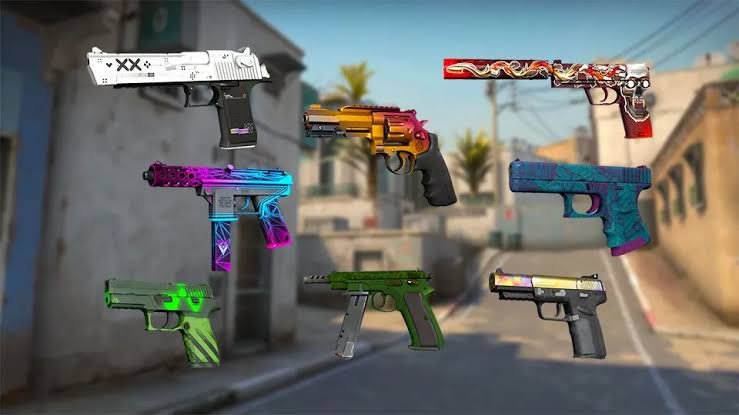
Walking into the buy menu for the first time can feel like opening a weapons catalog with no instructions. The full list of CS2 guns includes pistols, submachine guns, rifles, sniper rifles and heavy weapons, and some of them are available only to one side. Knowing what each category is good at helps you spend money wisely and win more rounds. Here is a simple overview to get you started.
Pistols
Every player starts with a pistol: the Glock-18 for Terrorists and the USP-S or P2000 for Counter-Terrorists. Upgrades include the P250, Dual Berettas, CZ75-Auto, Tec-9, Five-SeveN, Desert Eagle and R8 Revolver. Pistols are vital in the first round of each half and in low-money rounds.
SMGs
Submachine guns such as the MAC-10, MP9, MP7, MP5-SD, UMP-45, P90 and PP-Bizon are cheaper than rifles and great at close range. They also give a larger money reward per kill, which makes them useful when your team needs to rebuild its economy.
Rifles
Rifles are the backbone of full-buy rounds. Terrorists rely on the AK-47 and Galil AR, while Counter-Terrorists use the M4A4 or M4A1-S and the FAMAS. Scoped rifles, the SG 553 for Terrorists and the AUG for Counter-Terrorists, offer extra precision at long range.
Sniper Rifles
The AWP is the most powerful sniper and can take down an enemy with one shot to the body. The SSG 08 is a light, affordable alternative, and the semi-automatic G3SG1 and SCAR-20 are expensive options used mostly in specific situations.
Heavy Weapons
Shotguns such as the Nova, XM1014, MAG-7 and Sawed-Off are deadly in tight corners, while the M249 and Negev machine guns can spray down whole areas. They are situational, but in the right spot they can surprise any opponent.
Economy Basics: When to Buy What
In Counter-Strike 2, money is shared across rounds, so what you buy now affects what your team can afford later. A common rhythm is to buy rifles and armor when the whole team can afford them, save together after a lost round, and use cheaper SMGs or upgraded pistols when money is tight. Coordinating buys with teammates is just as important as choosing the right gun among all CS2 weapons.
Do not forget utility. Smokes, flashbangs, Molotovs and HE grenades often win more rounds than an expensive gun, and they are cheap compared with rifles. A balanced buy with armor, a rifle and a couple of grenades is usually better than the most expensive weapon with nothing else.
Side-Specific Weapons at a Glance
Terrorists: Glock-18, Tec-9, MAC-10, Galil AR, AK-47, SG 553, G3SG1, Sawed-Off.
Counter-Terrorists: USP-S or P2000, Five-SeveN, MP9, FAMAS, M4A4 or M4A1-S, AUG, SCAR-20, MAG-7.
Both sides: P250, Dual Berettas, Desert Eagle, most SMGs, the AWP, SSG 08 and most heavy weapons.
FAQ
Why can I not buy every gun?
Some weapons are side-specific, and Counter-Strike 2 also uses a loadout system where you choose which guns appear in your buy menu.
Which gun should a beginner learn first?
Start with the main rifle of each side, the AK-47 and an M4, because they are used in most rounds.
Do skins change how guns perform?
No. Finishes are cosmetic only; damage and recoil never change.

For a short break, start with Tic-Tac-Toe or Reaction Duel if you want a simple challenge, Hangman or Word Duel if you prefer words, and Connect 4 if you have time for a few strategic moves. Each has a familiar goal, so you can get into a round without learning a complicated game. Browser play also saves you an installation, whether you are playing alone or challenging a friend. If you are searching for unblocked games, though, remember that playing in a browser does not mean a site is available on every school or workplace network.
What Makes a Browser Game Work for a Short Break?
Start with the clock. A game that takes one quick round is easier to fit between classes or during a scheduled work break than one that needs a long match. Simple controls matter just as much. If you can understand what to do from the first screen, you spend your break playing rather than figuring out how to navigate a menu. Games that can be paused between turns are useful when you cannot promise another player your full attention.
Think about where you will play, too. A quiet word puzzle may suit a shared room better than a game that relies on sound. On a phone, large buttons and a clear screen can make a quick round more comfortable; at a desk, a mouse may make a familiar board game feel natural. A page that requires no app-store download or account creation also avoids two steps that can take longer than the game itself. It still needs a working connection, and the game must be allowed on the network you are using.
Finally, notice what surrounds the game. A short session feels less inviting if you must close several interruptions before making a move. A lean browser experience with few ad interruptions often suits a short casual session better than a heavy app with a lengthy setup. For a casual break, a clear route from opening the page to starting a round is often more useful than a large collection of features you will never use.
Quick Games for Short Sessions
When you have only a moment, pick a game with a familiar goal. Tic-Tac-Toe needs little explanation: take turns placing marks and try to complete a line. A reaction challenge offers a different kind of break. Rather than planning several moves ahead, you focus on one prompt and try to respond quickly. BeatMe Games lists Tic-Tac-Toe and Reaction Duel among its quick games. Either can be a useful starting point when you want a straightforward challenge, though the time a round takes can vary.
If you have a little more time, consider a word game. Hangman gives you a familiar guessing task, while Word Duel adds a competitive angle for someone who wants to play against a friend. If you would rather think through a small board, try Connect 4. It is easy to understand, but each move gives the other player something to answer. That balance makes it a good fit when you want more than a reflex test without starting a lengthy match.
For a solo break, the same time-first approach works with short word or puzzle games. Look for a round you can finish before you have to put your device away. If you are likely to be interrupted, choose a game that lets you stop comfortably rather than one that asks you to commit to a long attempt. A quick game is only a good break game if its pace fits the break you actually have.
Why Link-Based Multiplayer Fits Group Chats
Multiplayer does not have to begin with everyone downloading the same app. A shared game link can turn an ordinary group chat into a place to issue a quick challenge. One person starts a game, sends the URL, and the other person opens it in a browser. That removes the usual round of questions about which app to install and whether everyone has an account. It also makes a small game easier to suggest casually: a friend can see the challenge in the conversation where you already talk.
BeatMe Games uses that approach for free browser-based challenges. Its catalog offers over 40 games, including quick duels, score challenges and longer board games, that can be started through a shared URL. No app or sign-up is required to begin. You make a move and share a short challenge URL to play anyone with a link. That is a practical option when you want to invite one friend without organizing a formal gaming session. The site lists games for phones, tablets and computers, so the invitation need not assume that both people are sitting at desks.
The type of challenge matters more than the size of the chat. A reaction duel suits two people who are ready to play now. A turn-based board game works better when replies come at different times. In a busy conversation, a short score challenge gives friends a result to respond to without asking everyone to join the same live match. Pick the format that matches how quickly your friends are likely to answer, and a shared URL becomes an invitation rather than another task.
Modern browsers in 2026 can support responsive short multiplayer rounds, though actual play still depends on the game, device and connection. Keep expectations modest if someone is on a slow network or switching between devices. The appeal is not that every match will be flawless. It is that a small challenge can start with fewer steps, then end when the break does.

Playing at School or Work: Check the Context
“Unblocked games” is a common search phrase, but it is not a guarantee. A game may run in a browser and still be unavailable on a particular school or workplace network. Filters and local rules vary. If a page does not open, choose something permitted for that setting instead of treating a blocked page as a problem to get around. The same principle applies to the time you spend playing: a game that fits a scheduled break may not fit a lesson, meeting or task that needs your attention.
Consider the people nearby as well. Mute sound before opening a game in a quiet space, and avoid a multiplayer round if you may need to leave the other player waiting. A short puzzle or a single turn can be less disruptive than a match that asks for constant responses. On a shared computer, it is sensible to leave the browser as you found it and avoid entering personal details just to fill a few minutes.
This is where games without downloads or registration are useful, but their convenience is only one part of the decision. A suitable break game should also be easy to close, comfortable on the device you have and appropriate for the place you are in.
Choose by Time, Company and Mood
If you have very little time, try a familiar round of Tic-Tac-Toe or a reaction challenge. With a few minutes more, a word game gives you something to think about without demanding a long session. If a friend is available and you both want a little strategy, Connect 4 offers a more deliberate exchange. These are ways to match a game to your break, not fixed limits: a pause between turns or an unexpected interruption can change how long any match takes.
Then decide whether you want company. Solo games let you start and stop on your own terms. Link-based challenges make more sense when the fun is in comparing a move or result with someone else. If you share a game in a chat, tell your friend whether you are ready to play immediately or happy to wait for a reply. That small bit of context makes a spontaneous invitation easier to accept.
Before opening anything, check that the site is permitted on your network and that you have enough time to finish or step away. Choose a quiet format for a shared space and a simple one for a short pause. The best browser game for school or work is the one that gives you a worthwhile break without making the next part of your day harder.




Six Open-World Gaming Habits to Bring Into GTA 6
Click to rate this post! [Total: 0 Average: 0] A quick browser game usually gives you a clear objective within...

Every Gun in Counter-Strike 2: A Beginner’s Guide to Weapon Categories
Click to rate this post! [Total: 0 Average: 0] Walking into the buy menu for the first time can feel...


The Best Browser Games for Short Breaks at School or Work
Click to rate this post! [Total: 1 Average: 5] For a short break, start with Tic-Tac-Toe or Reaction Duel if...


Mathematical Dissections of Instant Multiplier Calculations and Linear Ramping Mechanics in Crash Games
Click to rate this post! [Total: 0 Average: 0] Modern web applications require powerful and efficient architectures to deliver fast,...


How Indie Game Studios Can Work with Twitch Streamers When Launching a New Game
Click to rate this post! [Total: 0 Average: 0] For an independent game studio, a launch stream can introduce a...


What Players Often Overlook Before Trying Yono Rummy for the First Time
Click to rate this post! [Total: 0 Average: 0] The first game can be surprisingly different from what you imagined....


Why sports betting platforms are starting to feel more like gaming platforms
Click to rate this post! [Total: 0 Average: 0] Sports betting used to be fairly functional. You opened a market,...


Rummy on Android: What to Check Before Downloading a 13-Card Rummy App
Click to rate this post! [Total: 0 Average: 0] Rummy has made the move to mobile particularly well. A game...


Casino Apps Are Changing the Way People Discover Games
Click to rate this post! [Total: 0 Average: 0] An online casino used to feel much more like a website...


Roobet Promo Code – What Exclusive Bonus Does It Unlock?
Click to rate this post! [Total: 0 Average: 0] Crypto casinos look similar until the welcome package is unpacked. Sign-up...

The Pros and Cons of Living in a House or a City Apartment
Six Open-World Gaming Habits to Bring Into GTA 6
Every Gun in Counter-Strike 2: A Beginner’s Guide to Weapon Categories

What Is the Best Synthetic Indices Trading Strategy?
The Best Browser Games for Short Breaks at School or Work
Mathematical Dissections of Instant Multiplier Calculations and Linear Ramping Mechanics in Crash Games

Why Modern Sports Prediction Platforms are Emulating Casual Browser Game Design Principles

How Penetration Testing Helps Businesses Strengthen Their Cybersecurity
How Indie Game Studios Can Work with Twitch Streamers When Launching a New Game

Where to Turn When You’re Looking for a Reliable Cryogenic Transportation Company
-

 Finance4 years ago
Profitable Intraday Trading Advice For Novices
-

 Gaming3 years ago
Pixel Speedrun Unblocked Games 66
-

 Gaming4 years ago
Subway Surfers Unblocked | Subway Surfers Unblocked 66
-

 Internet4 years ago
Welcome to banghechoigame.vn – Your One-Stop Destination for Online Gaming Fun!
-
 Gaming4 years ago
Minecraft Unblocked Games 66 | Unblocked Games Minecraft
-

 Gaming4 years ago
Google Baseball Unblocked | Google Doodle Baseball Unblocked 66
-

 Gaming4 years ago
Tunnel Rush Unblocked | Tunnel Rush Unblocked 66
-

 Internet3 years ago
Premium Games Unblocked: Unleash Your Gaming Potential