

Gaming
How to Unlock Web3 Play-to-Earn Games With Your Bitcoin Wallet


Web3 gaming, which began as a niche idea, is now a legitimate entertainment industry, with play-to-earn figures bringing in millions of players from all over the world. Bitcoin wallets, which have traditionally been used to store and transfer cryptocurrency, are now being used as gateways to these blockchain-based gaming experiences. The shift involves a fundamental shift in how players interact with games, moving away from centralized platforms and towards decentralized ecosystems where players have actual ownership of their digital assets.
Web3 Technology Gains Traction Across Industries, Including Gaming Interest
Web3 technology is gaining popularity in many industries, such as the finance industry, real estate, supply chain management, healthcare data systems, and the entertainment industry. Financial institutions have adopted blockchain for faster settlement and for transparent transactions, providing evidence of the technology’s reliability at scale. Real estate platforms are tokenizing properties to allow fractional ownership, and supply chain companies are using blockchain to verify the authenticity of their products and to track shipments in real time. Healthcare organizations are considering decentralized data system approaches that provide patients with control over their medical records.
This dizzying adoption has attracted the gaze of the gaming industry, which saw an opportunity to use the same principles for player experiences. In iGaming specifically, this technology has served as a way to make big improvements on traditional online gambling models. Players can now enjoy bitcoin poker that comes with large game libraries that come with fast withdrawals, and lucrative bonuses that traditional online gambling can’t match. Gaming developers realized that if blockchain could change financial transactions and asset ownership in other industries, it could do the same to the way players interact with in-game items and virtual economies.
Understanding the Link between Bitcoin Wallets and Web3 Games
Bitcoin wallets are seen as digital identity tools in the Web3 ecosystem, which enables players to authenticate themselves without having to create traditional usernames and passwords. When a player connects their wallet to a Web3 game, they’re connecting their blockchain address to the gaming platform. This connection allows the game to have assets for which it can verify ownership, to process transactions, and reward players with some cryptocurrency or NFTs. Most play-to-earn games are compatible with various types of wallets, including hardware wallets (e.g., Ledger, Trezor), software wallets (e.g., MetaMask, Trust Wallet), and exchange-based wallets from platforms such as Coinbase.
The process of connecting with a game or app that utilizes this type of integration usually requires visiting the website or opening the application, choosing an option to connect a wallet, and authorizing the connection in the wallet interface. Players have full control over their assets during this process as well because Web3 games cannot access funds without explicit permission for every transaction. This is a major departure from how most users played games in the past, where they had to trust the company with their money, which was deposited into their account, and trust them to process their withdrawals.
Popular Play-to-Earn Games Covered by Bitcoin Wallets
Several prominent play-to-earn games have set themselves apart as leaders in the Web3 gaming space. Axie Infinity was the first to pioneer the model, allowing players to breed, battle, and trade digital creatures and receive rewards in cryptocurrencies. The game requires its players to buy NFT-based characters before they play, and some players in developing countries make a lot of money daily by playing the game. Gods Unchained provides a trading card game experience, in which players really own their cards, as NFTs, and are able to sell them on secondary markets.
The Sandbox and Decentraland offer virtual experiences in a sandbox where players can buy parcels of land, build properties, and earn money from their creations. These metaverse platforms have received significant attention in terms of investment from major brands and celebrities who believe in the potential of virtual real estate. Splinterlands offers a card battler that has an entry barrier; it offers reward systems for a daily challenge that is easy to learn for a newcomer.
Technical Requirements of Accessing Web3 Games
Players require more than a Bitcoin wallet for participation in Web3 gaming. Most play-to-earn games run on specific blockchain networks, some of the most common being Ethereum, Binance Smart Chain, Polygon, and Ronin. Bitcoin itself doesn’t allow for the smart contract functionality necessary for complex gaming mechanics, so players usually have to bridge their Bitcoin to compatible networks or swap them for tokens native to the blockchain of their choice.
Gas fees are another consideration since transactions on the blockchain need to be paid to network validators. These fees are dynamic and vary according to network congestion, and can have a major effect on profitability for someone earning small amounts for playing a game. Many of today’s Web3 games have moved to layer 2 solutions or other blockchains with lower transaction costs to overcome this problem.
How Play-to-Earn Games Make Money and How to Make Money
The play-to-earn games have various monetization strategies that determine how to generate income. Some games offer rewards to players in the form of governance tokens for completing daily quests or winning battles, while others offer NFT drops that can be sold on marketplaces. The viability of such models relies extensively on new player acquisition and sustained demand for in-game assets.
Scholarship programs have also become a distinctive aspect of the play-to-earn ecosystem, enabling the owner of an NFT character to lend it to another player in return for a percentage of the rewards earned. This structure allows individuals who do not have capital to engage in games that require an upfront investment, and at the same time offers passive income opportunities for the holder of the assets. However, the earning potential varies dramatically from game to game and is dependent on factors such as time invested, skill level, and overall market conditions for the tokens within the game.
Security Considerations When Using Wallets to Connect with Gaming Platforms
Connecting cryptocurrency wallets with Web3 games comes with security risks that players should be aware of and counter. Phishing attacks targeting gaming communities have evolved in sophistication as scammers have generated fake websites, differentiating themselves from legitimate games to steal information crucial to wallet credentials. Players should always check URLs thoroughly and bookmark trusted game websites to prevent falling victim to fraudulent sites.
Smart contract permissions are another weakness in smart contracts, as they can end up emptying your wallet funds if given too much access. Players should review permission requests carefully and consider using dedicated gaming wallets that contain smaller amounts of money instead of connecting wallets containing high amounts of cryptocurrency. Hardware wallets offer greater security in that the private keys are offline, but they require extra effort with every transaction.

The first game can be surprisingly different from what you imagined. The cards may look familiar but the little decisions start to add up once the round is underway.
That is why Yono Rummy is best approached with a little patience rather than a rush to make the first move.
Knowing what to look for can save a beginner from a few very ordinary mistakes and make those early rounds easier to follow.
Don’t Assume You Already Know the Rules
This is probably the biggest trap for anyone who has played rummy somewhere else.
The word “rummy” does not automatically mean every version follows identical rules. The way sequences are made, points are counted, or a round is finished can vary.
Before playing, check the basics:
- What qualifies as a valid sequence?
- How are sets formed?
- How does a declaration work?
- How are points calculated?
- When does the round officially end?
It sounds obvious, but reading the rules once is far easier than trying to work them out after making a wrong move.
Look at the Whole Hand, Not Just One Card
A new player may pick up a card and immediately think, “That’s useful.”
Maybe it is. Maybe it isn’t.
A card only becomes valuable when it fits somewhere in the hand. Keeping several unrelated cards because each one might become useful later can leave very little room for a sensible combination.
Try sorting the hand mentally into three groups:
Cards that already fit
These are cards that are part of a possible sequence or set.
Cards that are close
Perhaps only one card is missing to complete a useful combination.
Cards with no clear purpose
These are the ones worth questioning first when deciding what to discard.
This small habit can make the hand feel much less cluttered.
The Cards Other Players Throw Away Matter
It is easy to become absorbed in your own hand and forget that other players are making decisions too.
Watch the discard pile.
If someone keeps picking up cards from a particular range, they may be building around them. If they repeatedly throw away certain cards, that can also give you something to think about.
You don’t need to guess another player’s entire hand. Just pay attention.
Even noticing one useful detail during a round is better than ignoring everything outside your own cards.
Don’t Keep a Card Just Because It “Might” Help
This happens all the time with beginners.
A player has a card that does not fit the current combinations but keeps it anyway. Five turns later, it is still sitting there.
Hope can be expensive in terms of space.
Ask yourself:
“What am I realistically going to do with this card?”
If there is no clear answer, letting it go may be more practical than waiting for a perfect card that may never appear.
Slow Down When the Game Gets Busy
Once several turns have passed, the temptation to play quickly becomes stronger. You have already seen the cards, you think you know what you want, and suddenly a careless tap looks easier than another few seconds of thought.
That is where mistakes happen.
A short pause can help you notice:
- A sequence you nearly overlooked
- A card that no longer fits
- Something another player has been collecting
- A better discard than your first choice
Speed usually comes naturally with familiarity. There is no prize for making a beginner’s first few rounds unnecessarily fast.
Rewards Should Not Distract From the Game
Promotions can be tempting, particularly when a player is exploring several features at once.
If you come across Yono VIP, take a moment to understand what the particular reward or offer actually requires. Terms can matter just as much as the headline attached to a promotion.
Look for details such as:
- Eligibility requirements
- Expiry periods
- Usage conditions
- Any restrictions attached to rewards
A reward is easier to appreciate when you know exactly what it involves.
A Bad Round Doesn’t Need a Dramatic Response
Losing a round can be annoying. Losing after being one card away from a good combination can be even worse.
The natural reaction is sometimes to immediately change the way you play.
That could mean upping the stakes, playing more aggressively, or even going longer than you planned, simply because the previous result was disappointing.
None of those reactions fixes the earlier round.
It is usually more useful to treat each round as its own event. If something went wrong, think about the decision that caused it rather than trying to “get even” on the next hand.
Remember That Other Games Work Differently
Once players become comfortable with one game, curiosity often takes them elsewhere.
That is perfectly natural. But moving from cards to another category requires a fresh look at the rules.
For example, Yono Gemes may offer a different type of gaming experience, while Yono Arcade can introduce another style of play altogether. The same goes for Yono Slots, where the pace and mechanics are not the same as a rummy table.
Familiarity is helpful, but it should not be mistaken for knowledge of every game.
Keep a Few Simple Boundaries
Before starting a session, decide a few things while your head is clear.
Set a time limit.
Knowing when you plan to stop prevents a short session from quietly becoming much longer.
Set a spending limit.
Only use an amount you are comfortable losing.
Take breaks.
If decisions start feeling rushed or frustrating, stepping away is better than forcing another round.
Don’t chase losses.
A previous result does not need to control the next decision.
These are basic habits, but they become particularly useful when excitement starts taking over.
What Beginners Usually Learn After a Few Rounds
The first few games are rarely about playing perfectly.
You begin noticing things that were invisible at the start: why a certain discard was sensible, why holding one card for too long created problems, or how another player’s choices can reveal useful information.
That learning happens gradually.
Instead of worrying about looking experienced, concentrate on understanding what is happening in front of you. The small lessons tend to add up.
Final Thoughts
There is no need to rush into a new card game simply because the basic idea appears familiar.
Yono Rummy becomes easier to understand when players give themselves time to learn the rules, watch the table, and make decisions without unnecessary pressure.
A thoughtful first session can be more useful than a hurried one. Learn from the awkward moves, notice what works, and let experience build naturally.
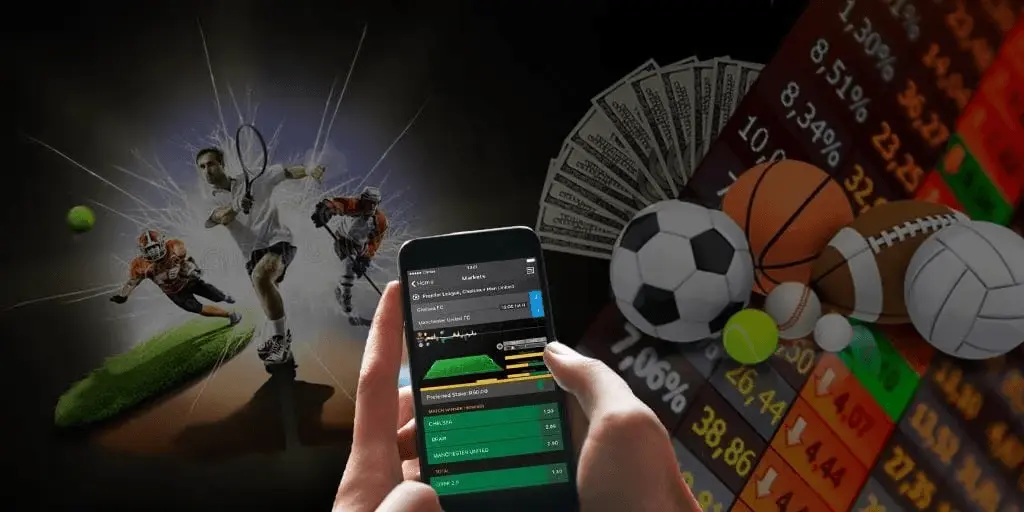
Sports betting used to be fairly functional. You opened a market, picked a team or player, placed the bet and left. The platform itself did not need much personality because the sport was doing most of the work. That has changed. Modern sportsbooks are competing not only on odds, but on how the whole product feels. Navigation, personalisation, live updates and account features now shape the betting experience almost as much as the markets themselves. For players who are used to games that react quickly and remember what they like, a sportsbook that feels slow or badly organised can seem dated almost immediately.
The interface has to get out of the way
Gaming platforms learned this years ago. If a menu is confusing, people stop using it. If important information is buried, the experience feels heavier than it should. Sportsbooks face the same problem. A football bettor may want one league, one match and one market. They should not have to scroll through twenty unrelated competitions first. The better platforms make common actions obvious and keep the bet slip close without filling the screen with noise. That sounds basic, but it is one of the biggest differences between an average sportsbook and a more premium betting product.
Personalisation is becoming part of the service
Games often remember what players opened last, which modes they use and where they left off. Sport betting is moving in the same direction. A regular bettor might prefer Premier League football, tennis and live basketball. There is little reason to show them the exact same homepage as someone who follows cricket and esports. Personalised promotions and more relevant market suggestions can make the betting experience feel less generic, especially for customers who use the same platform every week. That is also where premium betting starts to mean something beyond a larger bonus. If the service is genuinely premium, it should know enough about the customer to make the account easier to use.
Live betting has changed the pace completely
Pre-match betting is still important, but live markets have made sportsbooks much more dynamic. Prices change. Markets open and close. A match that looked uninteresting before kickoff can suddenly become the one everyone is watching. That creates a much more game-like pace. The user is not simply reading a static list anymore. They are following an event that keeps changing, with the interface updating around it. For that to work well, speed matters. So does clarity. A platform can have hundreds of live markets and still feel poor if the user cannot find the one they want quickly enough.
Premium betting is really about consistency
The word “premium” gets used too easily. It should not only mean VIP branding or an exclusive promotion. A premium betting experience is usually built from smaller things working properly every time: reliable account access, clear payments, responsive support, relevant offers and a sportsbook that does not feel cluttered. The more often somebody uses the platform, the more those details matter. The welcome offer is remembered for a few days. A frustrating interface is remembered every weekend.
The sportsbook is becoming part of the entertainment
This is probably the biggest change. The sport is still the reason people arrive, but the platform now shapes how they follow it. A good sportsbook can make a busy Saturday easier to navigate. A poor one can make even a simple bet feel like work. That is why sports betting platforms are starting to borrow more from gaming design. They are no longer only places where a bet is placed. They are becoming part of the overall betting experience.

Rummy has made the move to mobile particularly well. A game that once meant finding a deck, a table and enough people to play can now be practised on an Android phone in a few minutes.
But searching for a rummy app can quickly become confusing. There are different rule sets, different numbers of cards, online and offline modes, and apps that use the word “rummy” for games that are quite different from the Indian 13-card format.
Before installing anything, it helps to know exactly what you are looking for.
Start With the Rummy Variant
The first thing to check is the version of rummy offered by the app.
For players familiar with Indian Rummy, the important phrase is usually 13-card rummy. Each player receives 13 cards and tries to arrange them into valid sequences and sets.
A typical winning arrangement requires at least two sequences, including a pure sequence. A pure sequence contains consecutive cards of the same suit without using a joker as a substitute.
This matters because an app built around another rummy variant may have different card counts, scoring rules or requirements for a valid declaration.
Check What the Download Page Actually Tells You
A useful app page should provide more than a download button.
Before installing, look for basic information such as:
- Android compatibility
- app version and file details
- the rummy format included
- installation instructions
- whether an internet connection is required
- gameplay or rules information
Players specifically looking for a traditional Android version can use a Rummy Download page that explains the 13-card Indian Rummy format alongside the app information.
That context is useful because it lets you understand the game before installing it instead of discovering the rules after opening the app.
Understand Sequences Before Your First Game
The sequence system is one of the most important parts of 13-card Indian Rummy.
A sequence is a group of consecutive cards from the same suit. For example:
5♥ – 6♥ – 7♥
is a straightforward sequence.
A pure sequence follows the natural order without replacing a missing card with a joker. An impure sequence can use a joker where the rules allow it.
New players often concentrate on making sets and overlook the pure-sequence requirement. Learning this distinction before playing makes the first few games much easier to follow.
Sets Are Different From Sequences
A set normally contains cards of the same rank but different suits.
For example:
8♣ – 8♦ – 8♥
forms a set.
The difference sounds simple, but it becomes important when sorting 13 cards on a small mobile screen. A good rummy interface should make it easy to rearrange cards and identify possible groups without obscuring suits or ranks.
Look at the Interface, Not Just the Graphics
Card games do not need complicated graphics to work well on mobile. Clarity matters more.
Cards should be large enough to read, suits should be easy to distinguish and controls should not cover important parts of the hand. Sorting and grouping cards should also feel natural.
This becomes particularly important on smaller Android devices, where an interface designed mainly for large screens can make a simple card game unnecessarily difficult to use.
Check Android Compatibility
Not every Android device runs the same operating-system version or has the same amount of storage available.
Before downloading, check whether the app supports your Android version and whether there is enough free space on the device.
If an Android package is being installed directly rather than through an app store, the phone may also ask for permission to install an app from that particular source. Android users should review the file source and requested permissions before continuing.
An ordinary card game should not need access to unrelated parts of the phone simply to deal cards and record gameplay.
Online and Offline Play Are Not the Same
Another detail worth checking is whether the app requires a constant internet connection.
Offline play can be useful for practising card grouping, learning sequences and becoming familiar with the interface. Online modes may add multiplayer features but naturally depend on network availability.
Neither format is automatically better. The useful option depends on whether you want to learn the rules, practise independently or play with other people.
Learn the Game Before Playing Quickly
Mobile interfaces make it easy to move through a card game quickly, but speed is not particularly useful when the underlying rules are unclear.
New players are better served by first understanding:
- how the 13 cards are dealt,
- what qualifies as a pure sequence,
- how impure sequences work,
- how sets are formed, and
- what makes a declaration valid.
Once those basics are familiar, the digital version becomes much easier to follow.
Final Thoughts
A good Android rummy experience starts before the first hand is dealt.
Check that the app actually supports the rummy variant you want, understand its sequence and set rules, confirm Android compatibility and read the installation information rather than choosing an app based only on its name or screenshots.
For 13-card Indian Rummy in particular, understanding the pure-sequence rule is the best place to start. Once that foundation is clear, both the cards and the mobile interface become considerably easier to manage.
-

 Finance3 years ago
Profitable Intraday Trading Advice For Novices
-

 Gaming3 years ago
Pixel Speedrun Unblocked Games 66
-

 Gaming4 years ago
Subway Surfers Unblocked | Subway Surfers Unblocked 66
-

 Internet3 years ago
Welcome to banghechoigame.vn – Your One-Stop Destination for Online Gaming Fun!
-

 Gaming4 years ago
Minecraft Unblocked Games 66 | Unblocked Games Minecraft
-

 Gaming4 years ago
Google Baseball Unblocked | Google Doodle Baseball Unblocked 66
-

 Gaming4 years ago
Tunnel Rush Unblocked | Tunnel Rush Unblocked 66
-

 Internet3 years ago
Premium Games Unblocked: Unleash Your Gaming Potential