

Gaming
How to Build a Profitable CS:GO Skin Portfolio (Lessons from Mobile Gaming)

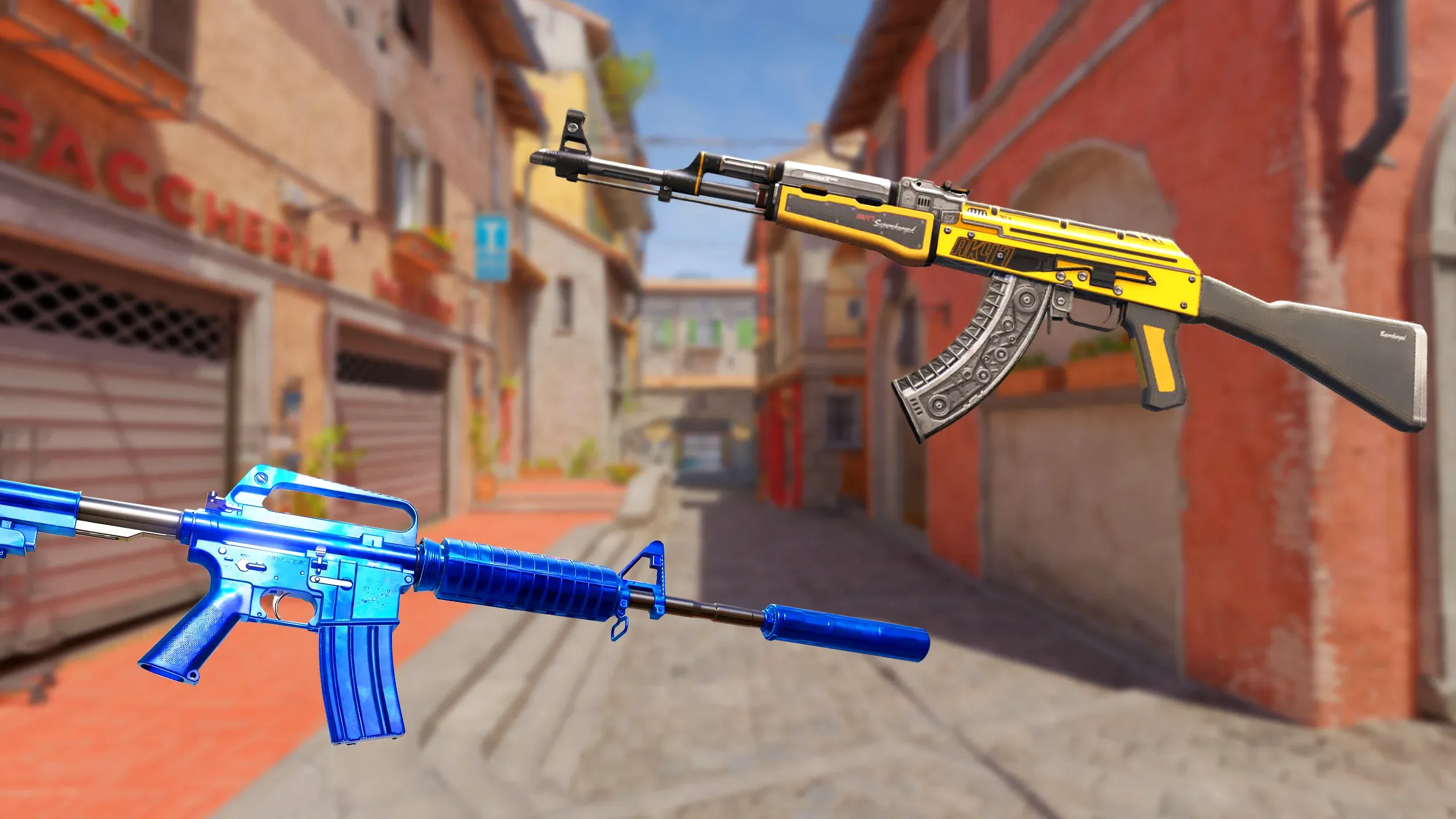
You’ve been grinding CS:GO for months, maybe years, watching your rank climb slowly while your friends show off their latest knife drops and Dragon Lore pulls. Meanwhile, you’re sitting on a handful of basic skins worth maybe $50 total, wondering if there’s a smarter way to build actual value from your inventory without spending your entire monthly budget on loot boxes.
Here’s the thing most players miss: building a profitable skin portfolio isn’t about luck or dropping thousands of cases. It’s about strategy, timing, and learning from an unexpected source – mobile gaming economics. The same principles that drive successful mobile game monetization and asset management apply perfectly to CS:GO skins. Whether you’re looking to trade CS:GO skins strategically to grow your inventory value or simply make smarter purchasing decisions, understanding portfolio management fundamentals will put you ahead of 90% of players who treat skins as pure gambling.
In this guide, we’re breaking down exactly how to approach your CS:GO inventory like a profitable investment portfolio, using proven lessons from mobile gaming’s most successful monetization strategies. No get-rich-quick schemes, no risky gambling – just practical, actionable tactics that work whether you’re starting with $20 or $200.
The Mobile Gaming Mindset: Why Your CS:GO Inventory is a Gacha Game
Alright, let’s reframe how you look at your inventory. Have you ever played a mobile “gacha” game? You know, the ones where you spend in-game currency for a random chance to pull a super-rare, 5-star hero? You might get a common character 99% of the time, but that 1% chance of a legendary drop keeps you coming back.
Sound familiar? That’s because opening a CS:GO case is, at its core, a gacha pull. Your P250 | Sand Dune is the common 3-star hero, and that Karambit | Doppler you dream of is the ultra-rare 5-star character. Most players stop their thinking right there – they treat it as pure luck. But as a mobile gaming strategist, I can tell you that the most successful players aren’t just lucky; they understand the underlying economy.
This is the mindset shift you need to make. Stop thinking like a player opening cases and start thinking like a portfolio manager navigating a complex market.
In the mobile gaming world, value is driven by controlled scarcity. When a game developer runs a limited-time event for a powerful new character, players know their chance to get it is finite. Once the event ends, that character becomes exponentially rarer and more valuable. CS:GO operates on the exact same principle. CS:GO skins operate in a controlled supply economy parallel to ‘gacha’ mechanics in mobile games, where rare skins from discontinued cases and major events (like tournaments) experience verifiable scarcity and price spikes similar to limited-time characters in mobile gacha systems. When Valve moves a case to the rare drop pool or a Major concludes, the supply of those specific skins and stickers is effectively capped forever. This isn’t luck; it’s predictable, event-driven economics, and it’s the foundation of building a profitable portfolio.
The ‘Free-to-Play’ Path: Building Your First $100 Portfolio with Zero Investment
So, you’re starting from scratch? Perfect. In mobile gaming, we call this the “Free-to-Play” (F2P) grind. It’s the path players take to build power and resources without spending a dime, relying purely on time and effort. Your CS:GO journey can start the exact same way. Forget your credit card; your most valuable asset right now is your time in-game.
Think of your weekly CS:GO drop as your “Daily Login Bonus.” Every week, just for playing and leveling up your profile, Valve gives you a free item—usually a low-value skin, a graffiti, or a case. On its own, a $0.05 skin seems worthless. But a consistent F2P player knows that small, recurring rewards are the foundation of wealth. The same goes for the cases you earn randomly by finishing matches. This is your “resource farming.”
Here’s the critical F2P rule: You do not consume your farmed resources. Don’t open the cases! That’s the equivalent of a mobile gamer wasting their premium currency on a low-probability gamble. Instead, you take every single one of those drops—the graffiti, the cheap skins, the cases—and you sell them on the Steam Community Market. Yes, you’ll be dealing in cents, not dollars, at first. But after a few weeks, those cents add up. That $0.50 from a new case drop and $0.15 from a few skins suddenly becomes a few dollars in your Steam Wallet. This is your seed capital, earned with zero cash investment.
Once you’ve patiently accumulated $10, $15, or even $20 from grinding these free drops, you can start making real moves. Instead of letting dozens of cheap items clutter your inventory, you can begin consolidating them. Many players find that using a trusted trading platform is far more efficient than the Steam Market for this step, and you can use a site like Skinsmonkey to bundle your F2P earnings into a single, more desirable skin that has actual growth potential. You’ve officially turned gameplay hours into a tangible asset, laying the first brick of your portfolio.
From Drops to Dollars: Mastering Low-Tier Trading and Trade-Up Contracts
Alright, you’ve successfully turned your gameplay time into a small stack of Steam Wallet funds and a collection of low-tier skins. What’s the next level of this game? It’s time to learn about CS:GO’s “crafting system,” the Trade-Up Contract. Think of it like a fusion mechanic in a mobile RPG: you combine ten common items for a shot at one much rarer item.
This isn’t just a blind gamble; it’s a game of calculated odds. The principle is simple: you use ten skins of the same rarity (e.g., Mil-Spec blue) to create a single skin of the next highest rarity (e.g., Restricted purple). A trade-up is profitable when the total cost of your ten input skins is lower than the average market value of all the possible skins you could receive as an outcome. It requires a bit of homework on skin collections and wear values, but it’s the first real step from being a collector to being an investor.
Understanding market timing elevates this strategy. For instance, search interest for ‘CSGO knife skins’ surged by 47% during major esports events and the CS2 beta launch, driving market activity. While you won’t be crafting a knife from cheap skins, this event-driven hype affects the entire economy. By mastering trade-ups, you’re learning to leverage these predictable cycles, turning your F2P scraps into assets with genuine growth potential.
Investing Like a Pro: Identifying High-Growth ‘Assets’ for Your Portfolio
So, you’ve graduated from farming cents to holding actual capital. Congratulations! Now the real game begins. In any mobile gacha game, a savvy player knows which heroes or gear are “meta”—the ones guaranteed to stay relevant and powerful. CS:GO is no different. Your goal is to identify these high-growth digital assets. Let’s break down the top contenders for your portfolio.
First up are discontinued cases. Think of these as retired, limited-edition characters. Cases like the Bravo or Weapon Case 1 are no longer dropped in-game. Every time someone opens one, the global supply permanently shrinks. This simple supply-and-demand dynamic makes them a relatively safe, long-term investment. You buy them, sit on them, and watch their value slowly but surely climb as they become rarer.
Next, we have rare stickers, especially from older Major tournaments. These are your event-exclusive cosmetics. Stickers from legendary teams that have since disbanded (like iBUYPOWER or Titan) or from early Katowice tournaments have become digital artifacts. Their value is driven by scarcity, nostalgia, and the desire of high-tier collectors to craft unique weapon looks. They can be more volatile than cases but offer much higher growth potential if you pick a winner.
Finally, there are the high-demand play skins. These are the evergreen “meta” weapons: the AK-47s, M4A4s, and AWPs that players actually use every single day. While many are stable, certain skins can experience surprising volatility. For instance, a desirable skin like the AK-47 Hydroponic (Factory New) has seen value spikes of around 50% in just 30 days, often fueled by trader speculation and market manipulation. While you might not be buying a Hydroponic outright, understanding these trends helps you spot opportunities, proving that even a well-chosen skin from a trade-up can become a powerful, short-term investment.
Risk Management & Cashing Out: Your Endgame Strategy
Alright, you’ve built a solid inventory of digital assets. So, what’s the final boss fight? It’s not acquiring more items—it’s protecting what you’ve earned and knowing when to take your profits off the table. In any game, having the best gear is useless if you lose it all in one risky move. The same goes for your CS:GO portfolio.
First, let’s talk about diversification. You wouldn’t build a raid party with only one class of hero, would you? Your portfolio needs the same balance. Going all-in on a single hot sticker or case is a recipe for disaster. Spreading your investment across different asset types—some stable discontinued cases, a few high-risk/high-reward stickers, and maybe a popular play skin—protects you from catastrophic losses. If one asset class tumbles, the others can keep your portfolio afloat.
If you need proof, just look at the market’s volatility. Hype can create staggering peaks, but the fall is just as dramatic. For example, the Evil Geniuses (Holo) sticker from the Stockholm 2021 Major skyrocketed to around £349.40, fueled by intense speculation. Just one week later, its value plummeted by over 95% to a mere £19.00. An undiversified portfolio built on that one sticker would have been completely wiped out.
This brings us to timing your exit. The golden rule is simple: sell into the hype. When you see everyone on social media and YouTube suddenly talking about a specific item, that’s often your cue to sell, not to buy. These predictable cycles, often tied to esports events, are your best opportunities to cash in on peak value before the inevitable correction.
Finally, how do you actually turn these digital items into real-world value? You have two main paths. The Steam Community Market is the safest and easiest option, but your earnings are locked in your Steam Wallet—perfect for buying new games or skins. For real cash, you’ll need to use reputable third-party platforms. While they require more due diligence to ensure you’re using a secure site, they are the only way to convert your digital portfolio into actual money in your bank account. Having a clear exit strategy is what separates a collector from a true investor.
Avoiding the ‘Whale’ Traps: Common Financial Mistakes from Mobile Gaming
As a mobile gaming strategist, I see players make the same financial missteps over and over, often falling into what we call “whale traps”—costly mistakes driven by emotion. The CS:GO market is no different, but you can easily sidestep these pitfalls.
First, let’s crush FOMO (Fear Of Missing Out). When you see an item skyrocket, the urge to buy in is immense. This is the gacha game equivalent of a “limited time” banner designed to trigger impulsive spending. Resist it. Buying at the peak of the hype is a surefire way to lose money. For every trader selling for a massive profit, there’s someone else buying at an unsustainable price.
Next, understand the crucial difference between investing and gambling. Buying a case because its supply is dwindling is a calculated investment. Opening that same case is gambling, plain and simple. You’re paying for a slim chance at a high-tier item, and the odds are overwhelmingly not in your favor. True portfolio growth comes from playing the market, not the slot machine.
Finally, always account for the silent profit killer: transaction fees. Whether on the Steam Market or a third-party site, every transaction has a cost. A 5% gain can quickly become a loss when you factor in the platform’s cut. Track these fees diligently; they’re the hidden “microtransactions” that can drain your wallet if ignored.
Sources
[1] Source: https://genelmag.com/partner-content/why-csgo-skins-are-still-valuable-assets-in-2025 CS:GO skins operate in a controlled supply economy parallel to ‘gacha’ mechanics in mobile games, where rare skins from discontinued cases and major events (like tournaments) experience verifiable scarcity and price spikes similar to limited-time characters in mobile gacha systems.
[2] Source: https://www.accio.com/business/csgo-skin-prices-trend-over-time Google Trends search interest for ‘CSGO knife skins’ surged by 47% during major esports events (IEM Katowice 2025) and CS2 beta launches, directly preceding increases in price and market activity—a dynamic akin to event-driven pulls in mobile games.
[3] Source: https://esports-news.co.uk/2025/10/08/counter-strike-skins-market-soars-to-new-peak-of-5-78-billion/
- Some low-tier CS:GO skins, such as the AK-47 Hydroponic (Factory New), have shown short-term value spikes of around 50% in 30 days, driven by supply manipulation and trader speculation, demonstrating the ability to turn random drops into profitable investments through trade-up contracts and tactical trading.
- Portfolio risk is high—values of rare assets can plummet by over 95% within a week following market hype peaks (e.g., EG Stockholm 2021 Major Holo sticker from £349.40 to £19.00), underscoring the necessity of diversification and careful timing when cashing out via Steam or third-party platforms.

For a short break, start with Tic-Tac-Toe or Reaction Duel if you want a simple challenge, Hangman or Word Duel if you prefer words, and Connect 4 if you have time for a few strategic moves. Each has a familiar goal, so you can get into a round without learning a complicated game. Browser play also saves you an installation, whether you are playing alone or challenging a friend. If you are searching for unblocked games, though, remember that playing in a browser does not mean a site is available on every school or workplace network.
What Makes a Browser Game Work for a Short Break?
Start with the clock. A game that takes one quick round is easier to fit between classes or during a scheduled work break than one that needs a long match. Simple controls matter just as much. If you can understand what to do from the first screen, you spend your break playing rather than figuring out how to navigate a menu. Games that can be paused between turns are useful when you cannot promise another player your full attention.
Think about where you will play, too. A quiet word puzzle may suit a shared room better than a game that relies on sound. On a phone, large buttons and a clear screen can make a quick round more comfortable; at a desk, a mouse may make a familiar board game feel natural. A page that requires no app-store download or account creation also avoids two steps that can take longer than the game itself. It still needs a working connection, and the game must be allowed on the network you are using.
Finally, notice what surrounds the game. A short session feels less inviting if you must close several interruptions before making a move. A lean browser experience with few ad interruptions often suits a short casual session better than a heavy app with a lengthy setup. For a casual break, a clear route from opening the page to starting a round is often more useful than a large collection of features you will never use.
Quick Games for Short Sessions
When you have only a moment, pick a game with a familiar goal. Tic-Tac-Toe needs little explanation: take turns placing marks and try to complete a line. A reaction challenge offers a different kind of break. Rather than planning several moves ahead, you focus on one prompt and try to respond quickly. BeatMe Games lists Tic-Tac-Toe and Reaction Duel among its quick games. Either can be a useful starting point when you want a straightforward challenge, though the time a round takes can vary.
If you have a little more time, consider a word game. Hangman gives you a familiar guessing task, while Word Duel adds a competitive angle for someone who wants to play against a friend. If you would rather think through a small board, try Connect 4. It is easy to understand, but each move gives the other player something to answer. That balance makes it a good fit when you want more than a reflex test without starting a lengthy match.
For a solo break, the same time-first approach works with short word or puzzle games. Look for a round you can finish before you have to put your device away. If you are likely to be interrupted, choose a game that lets you stop comfortably rather than one that asks you to commit to a long attempt. A quick game is only a good break game if its pace fits the break you actually have.
Why Link-Based Multiplayer Fits Group Chats
Multiplayer does not have to begin with everyone downloading the same app. A shared game link can turn an ordinary group chat into a place to issue a quick challenge. One person starts a game, sends the URL, and the other person opens it in a browser. That removes the usual round of questions about which app to install and whether everyone has an account. It also makes a small game easier to suggest casually: a friend can see the challenge in the conversation where you already talk.
BeatMe Games uses that approach for free browser-based challenges. Its catalog offers over 40 games, including quick duels, score challenges and longer board games, that can be started through a shared URL. No app or sign-up is required to begin. You make a move and share a short challenge URL to play anyone with a link. That is a practical option when you want to invite one friend without organizing a formal gaming session. The site lists games for phones, tablets and computers, so the invitation need not assume that both people are sitting at desks.
The type of challenge matters more than the size of the chat. A reaction duel suits two people who are ready to play now. A turn-based board game works better when replies come at different times. In a busy conversation, a short score challenge gives friends a result to respond to without asking everyone to join the same live match. Pick the format that matches how quickly your friends are likely to answer, and a shared URL becomes an invitation rather than another task.
Modern browsers in 2026 can support responsive short multiplayer rounds, though actual play still depends on the game, device and connection. Keep expectations modest if someone is on a slow network or switching between devices. The appeal is not that every match will be flawless. It is that a small challenge can start with fewer steps, then end when the break does.

Playing at School or Work: Check the Context
“Unblocked games” is a common search phrase, but it is not a guarantee. A game may run in a browser and still be unavailable on a particular school or workplace network. Filters and local rules vary. If a page does not open, choose something permitted for that setting instead of treating a blocked page as a problem to get around. The same principle applies to the time you spend playing: a game that fits a scheduled break may not fit a lesson, meeting or task that needs your attention.
Consider the people nearby as well. Mute sound before opening a game in a quiet space, and avoid a multiplayer round if you may need to leave the other player waiting. A short puzzle or a single turn can be less disruptive than a match that asks for constant responses. On a shared computer, it is sensible to leave the browser as you found it and avoid entering personal details just to fill a few minutes.
This is where games without downloads or registration are useful, but their convenience is only one part of the decision. A suitable break game should also be easy to close, comfortable on the device you have and appropriate for the place you are in.
Choose by Time, Company and Mood
If you have very little time, try a familiar round of Tic-Tac-Toe or a reaction challenge. With a few minutes more, a word game gives you something to think about without demanding a long session. If a friend is available and you both want a little strategy, Connect 4 offers a more deliberate exchange. These are ways to match a game to your break, not fixed limits: a pause between turns or an unexpected interruption can change how long any match takes.
Then decide whether you want company. Solo games let you start and stop on your own terms. Link-based challenges make more sense when the fun is in comparing a move or result with someone else. If you share a game in a chat, tell your friend whether you are ready to play immediately or happy to wait for a reply. That small bit of context makes a spontaneous invitation easier to accept.
Before opening anything, check that the site is permitted on your network and that you have enough time to finish or step away. Choose a quiet format for a shared space and a simple one for a short pause. The best browser game for school or work is the one that gives you a worthwhile break without making the next part of your day harder.
Gaming
Mathematical Dissections of Instant Multiplier Calculations and Linear Ramping Mechanics in Crash Games
Modern web applications require powerful and efficient architectures to deliver fast, reliable, and engaging digital experiences. This is especially important in the online casino industry, where users expect responsive interfaces, uninterrupted video streaming, and smooth gameplay. As technology continues to advance, developers are focusing on reducing latency, improving server performance, and creating applications that operate efficiently across different devices.
The Importance of Low-Latency Architecture
Low-latency architecture focuses on minimizing the delay between user actions and application responses. In online gaming environments, even small delays can affect interface responsiveness and the overall user experience.
Platforms offering Raja567 live casino experiences demonstrate why reliable connectivity and responsive web applications matter in digital entertainment. Live casino environments depend on consistent communication between servers and users, particularly when streaming dealer interactions and displaying real-time game information. Efficient infrastructure helps maintain stable connections and improves accessibility across different devices.
Developers typically use optimized server configurations, caching systems, and content delivery networks (CDNs) to reduce delays and improve application performance.
Real-Time Video Streaming Technologies
Real-time video streaming is an important component of modern online casino applications. Unlike traditional video playback, live streaming requires continuous data transmission and synchronization between video content and application interfaces.
WebRTC is commonly used for real-time audio and video communication. It supports browser-based connections and can provide low-latency streaming when properly configured.
HTTP Live Streaming (HLS) is another widely used technology. It divides video into smaller segments, allowing applications to deliver content efficiently while adapting to changing network conditions.
Choosing between streaming technologies depends on application requirements, expected traffic, and the desired balance between scalability and latency.
Improving Interactive Gaming Performance
Interactive casino applications require efficient communication between frontend interfaces and backend systems. Game information must be delivered accurately, while interfaces should remain responsive during periods of increased activity.
For example, platforms featuring Raja567 casino slots highlight the importance of accessible game interfaces and efficient application performance. Slot games rely on responsive visual elements, clear navigation, and consistent loading behavior. Optimized frontend development can help reduce unnecessary processing and improve compatibility across smartphones, tablets, and desktop computers.
Technologies such as JavaScript optimization, asynchronous processing, and efficient asset delivery contribute to smoother application experiences.
Scalability and Infrastructure Management
Scalability is essential for applications experiencing fluctuating traffic levels. Cloud infrastructure allows developers to increase or decrease computing resources according to demand.
Load balancing distributes incoming requests across multiple servers, reducing the risk of individual systems becoming overloaded. Containerization also helps developers deploy and manage applications consistently across different environments.
CDNs improve content delivery by storing static resources closer to users. This approach can reduce loading times and improve the availability of images, scripts, and other interface elements.
Database optimization is equally important. Efficient queries, caching mechanisms, and appropriate data management strategies help reduce processing delays.
Security and Mobile Optimization
Performance improvements must always work alongside strong security practices. HTTPS encryption, secure authentication, and reliable session management help protect user information and application communications.
Mobile optimization is another essential consideration. Responsive layouts, compressed media assets, and efficient scripts allow applications to operate across different screen sizes and network conditions.
Developers should also conduct regular performance testing to identify compatibility issues and improve overall reliability.
Conclusion
Optimizing web-app architectures for low-latency real-time video streaming requires a combination of reliable infrastructure, efficient communication protocols, scalable hosting, and strong security measures. These technologies help modern casino applications deliver responsive interfaces and consistent digital entertainment experiences.
As online gaming continues to develop, prioritizing performance, accessibility, transparency, and responsible gaming practices will remain important for creating dependable web applications.

For an independent game studio, a launch stream can introduce a new title to players who may never have heard of it. Twitch lets viewers watch gameplay and ask questions. A useful campaign starts with audience fit and a playable experience, not simply a creator’s name.
Choose Streamers Who Already Play Your Genre
Look for streamers whose regular content matches the game. A creator who often plays cozy simulators may fit a relaxed building game, while a strategy specialist may suit a turn-based tactics release. Genre familiarity matters because the audience has already shown interest in similar mechanics or themes. Review recent broadcasts, not just channel descriptions, and consider how the creator explains games, responds to chat and handles unfamiliar features. Match the creator’s tone to the game without scripting their reactions.
Use Average Live Viewers, Not Follower Count
Follower totals can mislead: a large channel may attract relatively few people to a typical broadcast. Compare average concurrent viewers across several recent streams, then review chat activity and how viewership changes by game category. Smaller creators can be valuable when their audiences are focused and interactive. Compare likely reach with cost, deliverables and support time, and avoid treating one unusually popular broadcast as normal. Set realistic goals such as relevant viewers reached, demo downloads, wishlists or player feedback.
Smaller creators can be valuable when their audiences are focused and interactive. Compare reach with cost and support time, and set realistic goals such as demo downloads, wishlists or useful feedback.
Prepare a Playable Build Before the Stream
Do not let the stream be the first stability test. Give the creator a build tested on the intended hardware, with clear installation instructions and enough content to make the session interesting. Confirm controller support, account requirements, server availability and access codes in advance. Provide a short briefing on the premise, controls, known limitations and features to explore, plus a technical contact. The briefing should help the creator start smoothly without scripting their reactions; keep a backup plan in case the build fails.
Provide a short briefing on the premise, controls, known limitations and features to explore, plus a technical contact. Help the creator start smoothly without scripting their reactions, and keep a backup plan in case the build fails.
Choose a Format That Fits the Game
A sponsored play session lets the creator play and share their genuine experience. It works best when the core gameplay is easy to understand and the session has a clear goal, such as completing a level. A developer Q&A suits games with unusual design choices or a community curious about development; make a developer available while leaving room for unscripted discussion. A co-op session can show teamwork and replayability in multiplayer games. Choose one main format rather than cramming every activity into one broadcast.
A developer Q&A suits games with unusual design choices or a community curious about development. A co-op session can show teamwork and replayability in multiplayer games. Choose the format that best fits the game rather than cramming every activity into one broadcast.
Studios comparing campaign options can review practical guidance on how to hire Twitch streamers for a game launch before choosing creators and formats. Consider genre fit, audience quality, schedule, deliverables and budget together.
Make Sponsorship Disclosure Clear
If a creator receives payment, a free copy or another benefit in exchange for coverage, agree on clear disclosure before the broadcast. Twitch provides a branded-content disclosure tool, and advertising rules may also require an understandable explanation. The creator should plainly say the stream is sponsored and repeat the disclosure during a long session so later arrivals understand the relationship. Keep the disclosure clear without dictating the creator’s opinion, and agree in writing on scope, timing, assets and links.
Reuse Highlights as Short Clips
A stream can continue working after it ends. With the creator’s permission and clear usage rights, select moments that communicate the game quickly: a surprising mechanic, funny co-op exchange, dramatic decision or useful developer answer. Edit them into short clips for social platforms, store pages or community updates, following each platform’s rules. Add accurate captions, credit the creator as agreed and avoid editing reactions out of context. Confirm where the studio may repost footage, for how long and whether paid promotion is included.
Review Results and Improve the Next Campaign
Decide what success means before the stream. Track live viewers, chat participation, demo downloads, wishlists or community sign-ups where measurement is available. Afterward, review creator feedback, technical issues and clip performance. Use those results to refine future creator choices and formats.
A successful campaign combines a relevant audience, dependable build, suitable format and transparent sponsorship. Careful preparation and respectful collaboration can make a launch stream useful to the studio and the players discovering the game.




The Best Browser Games for Short Breaks at School or Work
Click to rate this post! [Total: 1 Average: 5] For a short break, start with Tic-Tac-Toe or Reaction Duel if...


Mathematical Dissections of Instant Multiplier Calculations and Linear Ramping Mechanics in Crash Games
Click to rate this post! [Total: 0 Average: 0] Modern web applications require powerful and efficient architectures to deliver fast,...


How Indie Game Studios Can Work with Twitch Streamers When Launching a New Game
Click to rate this post! [Total: 0 Average: 0] For an independent game studio, a launch stream can introduce a...


What Players Often Overlook Before Trying Yono Rummy for the First Time
Click to rate this post! [Total: 0 Average: 0] The first game can be surprisingly different from what you imagined....


Why sports betting platforms are starting to feel more like gaming platforms
Click to rate this post! [Total: 0 Average: 0] Sports betting used to be fairly functional. You opened a market,...

Rummy on Android: What to Check Before Downloading a 13-Card Rummy App
Click to rate this post! [Total: 0 Average: 0] Rummy has made the move to mobile particularly well. A game...


Casino Apps Are Changing the Way People Discover Games
Click to rate this post! [Total: 0 Average: 0] An online casino used to feel much more like a website...


Roobet Promo Code – What Exclusive Bonus Does It Unlock?
Click to rate this post! [Total: 0 Average: 0] Crypto casinos look similar until the welcome package is unpacked. Sign-up...

Are Pokémon Cards a Real Alternative Asset
Click to rate this post! [Total: 0 Average: 0] The shiny pieces of cardboard you traded in the schoolyard are...


6 Mistakes Even Experienced Tongits Players Make (And How to Fix Them)
Click to rate this post! [Total: 0 Average: 0] Every experienced Tongits player thinks they have the game entirely figured...

What Is the Best Synthetic Indices Trading Strategy?
The Best Browser Games for Short Breaks at School or Work
Mathematical Dissections of Instant Multiplier Calculations and Linear Ramping Mechanics in Crash Games

Why Modern Sports Prediction Platforms are Emulating Casual Browser Game Design Principles

How Penetration Testing Helps Businesses Strengthen Their Cybersecurity
How Indie Game Studios Can Work with Twitch Streamers When Launching a New Game

Where to Turn When You’re Looking for a Reliable Cryogenic Transportation Company
Huge Demo, not a small teaser. Sanshui: Poker Puzzle. How far can you swim?

Following the NBA From the Philippines: A Survival Guide for Early-Morning Tipoffs
What Players Often Overlook Before Trying Yono Rummy for the First Time
Mathematical Dissections of Instant Multiplier Calculations and Linear Ramping Mechanics in Crash Games
Why Modern Sports Prediction Platforms are Emulating Casual Browser Game Design Principles
The Best Browser Games for Short Breaks at School or Work
What Is the Best Synthetic Indices Trading Strategy?
-

 Finance4 years ago
Profitable Intraday Trading Advice For Novices
-

 Gaming3 years ago
Pixel Speedrun Unblocked Games 66
-

 Gaming4 years ago
Subway Surfers Unblocked | Subway Surfers Unblocked 66
-

 Internet3 years ago
Welcome to banghechoigame.vn – Your One-Stop Destination for Online Gaming Fun!
-

 Gaming4 years ago
Minecraft Unblocked Games 66 | Unblocked Games Minecraft
-

 Gaming4 years ago
Google Baseball Unblocked | Google Doodle Baseball Unblocked 66
-

 Gaming4 years ago
Tunnel Rush Unblocked | Tunnel Rush Unblocked 66
-

 Internet3 years ago
Premium Games Unblocked: Unleash Your Gaming Potential