Finance
The Hidden Economy of Blox Fruits Codes Stocks and Trade Value Together

When you spend enough time inside Blox Fruits, you slowly realise that the game is not only about grinding or fighting bosses. There is a silent economy running in the background. Most players do not notice it clearly. The thing is very clear here. Codes, shop stock, and trade values are not isolated systems. They move together and affect each other all the time.
Many players treat these parts as separate. Codes feel like free rewards. Stock feels like a waiting game. Trading feels like luck. Once you connect these systems, the entire game starts feeling more logical and less confusing.
Understanding the Economic Layer Inside Blox Fruits
Blox Fruits does not show you charts or numbers like real markets. Still, the behavior feels very similar. Demand rises and falls. Supply changes with time. The player’s mindset decides value.
This economy mainly depends on three connected parts.
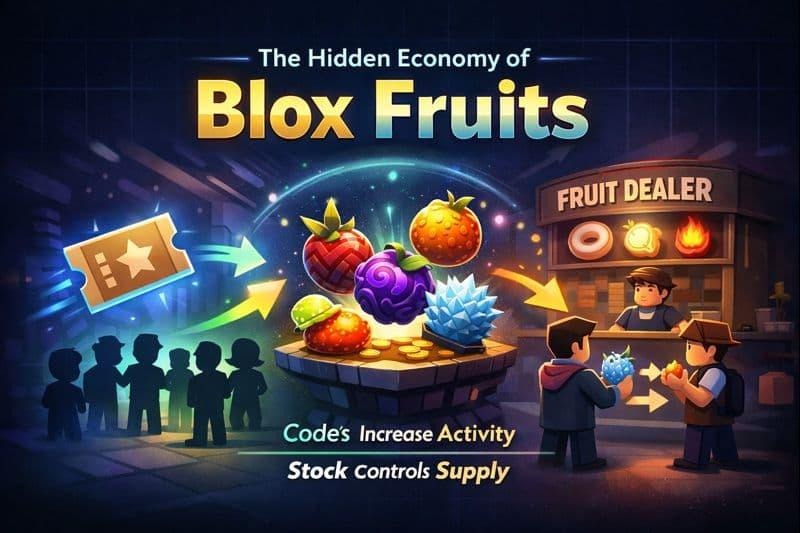
- Codes that increase activity and progression speed
- Fruit dealer stock that controls availability
- Trading values shaped by player demand and belief
When one part moves, the others react. That reaction is what creates value shifts.
How Codes Act Like Market Energy
Codes in Blox Fruits usually give EXP boosts or stat resets. On the surface, this looks harmless. The point is simple here. Codes push many players to level up faster at the same time.
When large numbers of players redeem codes together, a few things start happening.
- More players reach higher levels faster
- More players enter trading earlier than usual
- Demand for strong fruits increases suddenly
This demand increase happens without adding new fruits into circulation. That imbalance slowly changes trading behavior.
After major code releases, players usually want fruits that help grinding or PvP. This is why value movement feels sudden during these periods.
Fruit Dealer Stock Controls Scarcity
The fruit dealer stock decides which fruits feel common and which feel rare at any given time. Even a powerful fruit feels ordinary when it appears in stock repeatedly.
When a high demand fruit shows up in stock, the market reacts quickly.
- New players buy the fruit directly
- Traders expect short term value drops
- Trading activity slows for that fruit
Once the stock rotates out, scarcity returns. Players who waited benefit the most.
Codes indirectly affect this system too. Faster progression means more players checking stock often, which increases buying pressure during good rotations.
Trading Values Are Built by Players
Trading values in Blox Fruits are not fixed by the game. They are decided by players through shared belief and demand.

A fruit feels valuable when players believe it is valuable.
That belief usually comes from a mix of factors.
- How useful the fruit feels in grinding or PvP
- How recently the fruit appeared in stock
- How many players are actively searching for it
This is where many blox fruits trade and value calculators naturally come into the picture. Players want reference points to avoid bad trades. These tools do not control value. They reflect what the community thinks at that moment.
When stock or code activity changes, calculator values also shift. Nothing stays static.
The Loop That Keeps the Economy Alive
The hidden economy works in a repeating cycle.
- Codes increase player activity
- Higher activity increases fruit demand
- Stock controls which fruits stay scarce
- Scarcity shifts trading values
- Trading behavior reinforces demand
After that, the cycle repeats. This loop explains why sudden value spikes or drops feel confusing when you look at only one system.
Why New Players Struggle With Trading
New players usually enter trading without understanding this loop. A trade feels unfair because the context is missing.
Common mistakes new players make include.
- Ignoring recent stock rotations
- Trading right after major code drops
- Relying only on rarity instead of demand
Once you start watching patterns instead of individual trades, confidence improves.
How Long Term Players Stay Ahead
Experienced players usually follow quiet strategies.
- They trade after stock rotations end
- They wait during heavy code activity
- They store fruits during temporary demand drops
This approach is not about luck. It is about timing and patience.
External Rewards Also Influence the Economy
Player entry into the game also affects demand. Many players join after earning rewards outside the game.
Some players enter Blox Fruits after using Play store codes to redeem from reward apps or promotions. This increases new player activity in early seas. Early demand rises. Entry level fruits gain short term value.
Small changes become big when player numbers grow.
Final Thoughts on the Hidden Economy
Blox Fruits feels deeper once you stop viewing systems separately. Codes, stock, and trading values are connected gears. When one turns, the others move.
Understanding this ecosystem reduces frustration and improves decision making. Trades feel planned instead of risky. Progress feels earned instead of random.